High-volume hiring has never been more demanding. Talent acquisition teams are expected to screen more candidates, move faster, and still deliver quality hires. Voice bots for hiring are changing how this works. These AI-driven tools conduct structured voice interviews at scale, evaluate candidate responses automatically, and push the right profiles forward without manual intervention at every step. This blog breaks down where voice automation adds measurable value, what to look for in a solution, and how to make it work inside your existing recruitment process.
Key Takeaways
- Voice bots for hiring automate early-stage candidate screening, reducing time-to-hire and manual recruiter effort significantly.
- AI-powered voice interviews deliver structured, consistent evaluations that support fairer, more data-backed hiring decisions.
- The best results come when voice bot pre-screening is combined with human judgment at later stages of the hiring pipeline.
What Are Voice Bots for Hiring and Why Do They Matter?
High-volume hiring creates a serious bottleneck at the screening stage. Recruiters spend hours on initial calls that often yield little useful information. Voice bots for hiring solve this by automating those first conversations entirely. A candidate receives a call or a digital link, answers a set of structured questions in their own voice, and the system evaluates tone, content, and relevance using AI scoring. The recruiter receives a ranked shortlist instead of a pile of raw applications.
According to a LinkedIn Global Talent Trends report, speed and quality of hire are the two metrics talent leaders consistently prioritize. Voice automation directly improves both by removing low-signal effort from the earliest stage of the funnel. This makes voice bots for hiring one of the most practical tools available to modern talent acquisition teams.
Where Voice Bot Pre-Screening Delivers Real Value
Not every role benefits equally from voice automation. The technology delivers the clearest value in structured, high-volume environments such as customer support, logistics, retail, BPO, and entry-level tech roles. In these situations, the screening criteria remain consistent across large candidate pools. This makes it possible for an AI interview bot for hiring to apply the same evaluation framework to every applicant without fatigue or inconsistency.
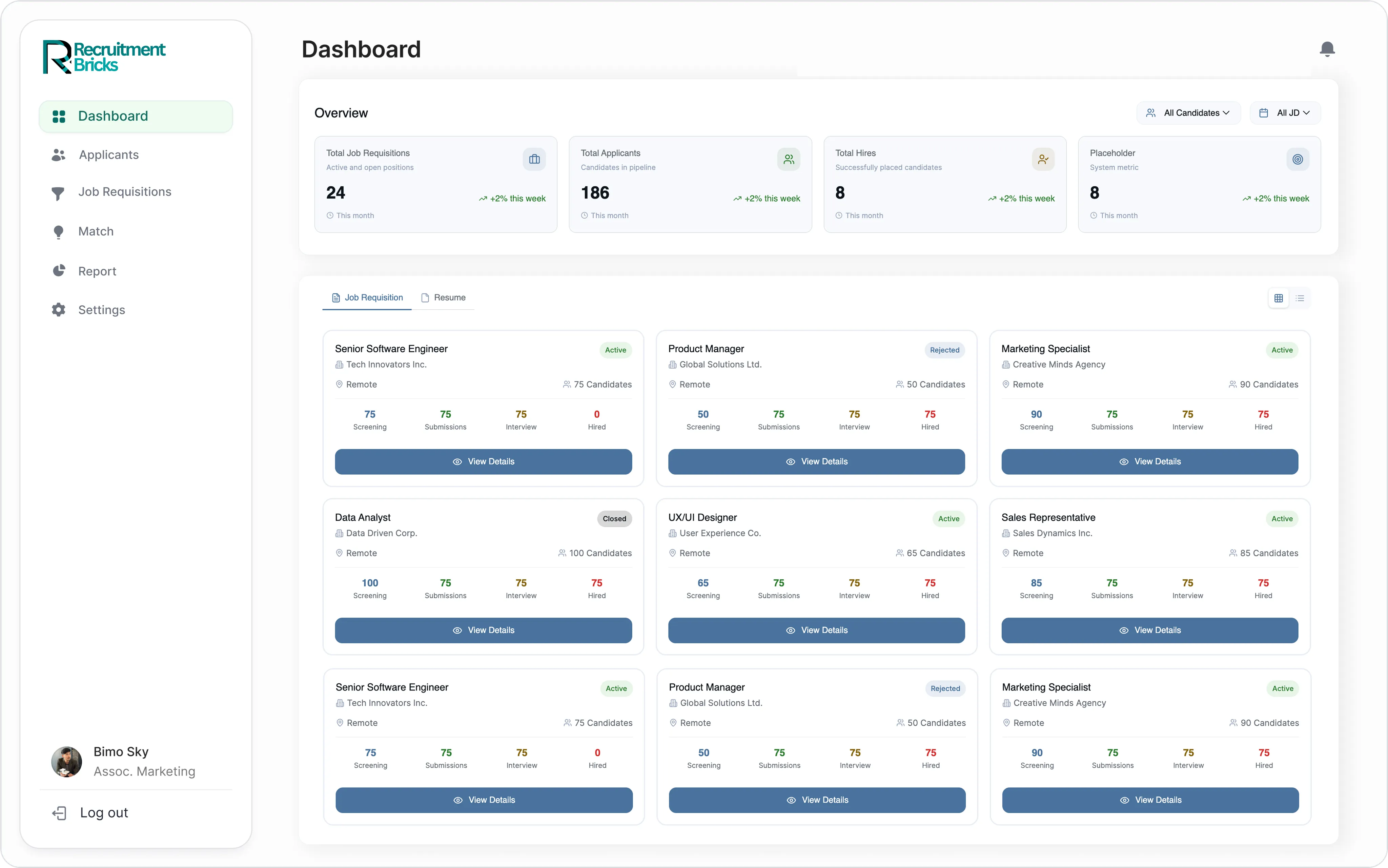
The results are significant. Recruiters no longer have to personally handle the first 200 screening calls for a single role. Instead, they review a curated shortlist produced by the voice bot, complete with scores and call recordings. Platforms like RecruitmentBricks take this further by generating custom interview questions based on the candidate's resume and the job description. This ensures each voice screening conversation is relevant to the specific role and not just a generic questionnaire. The quality of the resulting shortlist improves considerably, and the number of manual reviews before human engagement drops sharply.
How an AI Interview Bot for Hiring Works in Practice
A well-designed AI interview bot for hiring follows a clear and structured process. When a candidate applies, the system sends an automated outreach through email, SMS, or WhatsApp inviting them to complete a voice screening at a time that suits them. The bot asks pre-set questions, listens to candidate responses, and evaluates key signals such as communication clarity, keyword relevance, and response completeness. There is no need for a recruiter to be present at any point during this stage.
The output is an AI-generated score alongside a call recording and a structured transcript. Recruiters can review these in a few minutes rather than spending hours on live calls. The recruitment automation features available in modern platforms also include automated call logging, instant feedback nudges, and post-screening follow-ups through WhatsApp, keeping candidates engaged without extra recruiter effort. One critical capability to look for is explainability. The AI score should come with a clear rationale, not just a number. This allows recruiters to understand why a candidate ranked highly and ensures that hiring decisions remain accountable and auditable.
Choosing the Right Automated Voice Interview Software
Choosing automated voice interview software involves more than selecting the platform with the most listed features. Talent acquisition leaders should evaluate tools based on how well they integrate with existing workflows and the quality of the candidate experience they deliver. A platform that creates friction for candidates will lead to drop-offs and skew your screening data before the process even begins.
Key criteria to evaluate include:
- Explainable AI scoring: The system should explain why a candidate received a particular score. This supports recruiter oversight and audit readiness.
- ATS and HRMS compatibility: Voice bot pre-screening data should feed directly into your existing recruitment stack. Look for platforms with flexible integration capabilities that connect to your ATS and HRMS without manual data entry.
- Customizable question sets: Different roles require different screening criteria. The platform should support tailored question banks built from job descriptions and role requirements.
- Multilingual support: Global hiring or diverse candidate pools require voice bots that reliably handle multiple languages.
- Candidate experience design: A clunky or confusing interview experience leads to application drop-off. The best platforms make the process feel conversational and respectful of the candidate's time.
Look for automated voice interview software built by teams with a recruiting background, not only a technology one. The nuances of how candidates respond and which signals matter most in hiring require domain expertise that pure-tech vendors often lack.
Where Human Judgment Still Leads in AI-Driven Hiring
Voice automation is not a replacement for recruiter expertise. It is a filter that removes low-signal effort from the top of the funnel so recruiters can focus on what they do best. For senior positions, specialized technical roles, or any situation where cultural alignment is a critical hiring factor, human involvement at the interview stage remains non-negotiable. Candidates for leadership positions expect and deserve meaningful engagement with a person, not just a bot.
The strongest talent acquisition strategies treat voice bot pre-screening as the first stage of a well-designed funnel. Bots handle volume. Humans handle nuance. When these two layers are clearly separated and the handoff between them is well-defined, the entire process becomes faster and more defensible. The goal is not to remove the human from hiring but to remove the human from repetitive, low-value tasks that slow down the entire pipeline. Teams exploring this model can learn more about the human-first AI-assisted hiring philosophy that guides the RecruitmentBricks approach.
Conclusion
Voice bots for hiring are no longer an emerging experiment. They are a practical, production-ready solution for talent acquisition teams that need to move faster without compromising quality or fairness. By automating voice bot pre-screening at the top of the funnel, teams free up recruiter time for higher-value work, create more consistent candidate evaluations, and reduce time-to-hire in measurable ways. The key is choosing automated voice interview software designed with both recruiters and candidates in mind. If you want to see how this works in practice, request a demo and explore what AI-driven voice interviews can do for your hiring pipeline.
FAQ
What are voice bots for hiring?
Voice bots for hiring are AI-powered tools that automate initial candidate screening through structured voice conversations. They evaluate responses, generate scores, and produce ranked shortlists, helping talent teams reduce manual effort and speed up time-to-hire without compromising evaluation quality.
How does an AI interview bot for hiring evaluate candidates?
An AI interview bot for hiring evaluates candidates by analyzing voice responses for communication clarity, keyword relevance, and response structure. It generates a score alongside a transcript and call recording, giving recruiters an objective, structured basis for shortlisting decisions at the earliest stage of screening.
Is voice bot pre-screening suitable for all types of roles?
Voice bot pre-screening delivers the most value in high-volume, structured roles such as customer service, logistics, BPO, and entry-level positions. For senior or specialized roles, it works best as a first-stage filter followed by human-led assessments to evaluate leadership potential and cultural alignment.
How does automated voice interview software integrate with existing ATS tools?
Most automated voice interview software integrates directly with ATS and HRMS platforms through APIs, allowing screening scores, recordings, and transcripts to flow into existing workflows without manual data entry. This keeps the recruitment process centralized and reduces administrative overhead for talent acquisition teams.
What should talent leaders look for when choosing a voice bot platform?
Talent leaders should prioritize explainable AI scoring, seamless ATS integrations, customizable question banks, multilingual support, and a positive candidate experience. Platforms developed with recruiting domain expertise tend to produce more reliable screening outcomes, as highlighted in recent AI recruitment insights.
Can voice bots reduce bias in the hiring process?
Voice bots reduce certain types of bias by applying consistent evaluation criteria to every candidate regardless of background or application timing. However, the AI model itself must be carefully designed and audited. Voice bots promote bias reduction in screening, but they do not eliminate bias entirely from the hiring process.
What happens after a candidate completes a voice bot interview?
After a candidate completes a voice bot interview, the platform generates a scored transcript and call recording for recruiter review. Many platforms also trigger automated follow-up actions such as WhatsApp engagement messages, interview scheduling prompts, or feedback nudges to keep candidates informed and engaged throughout the process.
How do voice bots improve the candidate experience during screening?
Voice bots improve candidate experience by allowing applicants to complete screening interviews on their own schedule rather than waiting for a recruiter callback. When designed well, the conversation feels structured and respectful of the candidate's time, which positively affects employer brand perception during the early hiring stages.
Are voice bots for hiring compliant with data privacy regulations?
Reputable voice bot platforms are built with data privacy compliance in mind, including GDPR and regional data protection standards. Organizations should verify how candidate voice data is stored, processed, and deleted, and ensure the vendor provides clear documentation on data handling policies before deployment across hiring workflows.
Where can talent acquisition leaders stay updated on voice bot and AI recruitment trends?
Answer: Talent leaders can stay updated on AI-driven recruitment developments by following industry publications and attending specialist conferences. RecruitmentBricks also hosts and participates in HR technology events focused on the future of talent acquisition and the practical application of AI in hiring workflows.