Hiring the right people is harder than ever. Recruiters lose strong candidates to slow follow-ups, poor communication, and manual processes that create bottlenecks. An AI hiring platform changes this dynamic by automating repetitive tasks, improving candidate engagement, and converting more applicants into successful hires. In this guide, you will learn exactly how AI-powered recruitment technology drives higher conversion rates across every stage of your hiring pipeline and why forward-thinking HR teams are making the switch today.
Key Takeaways
- An AI hiring platform automates screening, scheduling, and follow-ups to reduce drop-off rates and keep your pipeline moving efficiently.
- Strong candidate engagement strategies powered by AI keep applicants informed and interested, while real-time analytics help hiring teams make faster, data-backed decisions.
- A modular automated hiring platform integrates with your existing ATS and HRMS tools for a seamless, scalable recruitment workflow.
Why Conversion Rates Matter in Recruitment
Most recruiting teams track time-to-hire or offer acceptance rates, but few pay close attention to conversion rates at each funnel stage. A conversion in recruitment means moving a candidate successfully from one stage to the next, from application to screen, from screen to interview, and from interview to offer. When any stage leaks too many candidates, the entire pipeline suffers.
According to research published by SHRM, a significant percentage of candidates drop out of the hiring process due to slow response times and poor communication. This is where an AI hiring platform delivers measurable impact. By automating touchpoints and surfacing the next best action for every recruiter, it prevents candidates from slipping through the cracks and keeps conversion rates strong at every stage.
How an AI Hiring Platform Improves Each Funnel Stage
A well-designed AI hiring platform does not just automate tasks in isolation. It improves conversion at every specific stage of the funnel by combining intelligent screening, engagement automation, and real-time analytics. Here is how each stage benefits.
Stage 1: Smarter Screening Converts More Applicants
Traditional resume screening is slow, inconsistent, and often biased. Recruiters spend hours reviewing applications and still miss qualified candidates. An AI-powered screening tool changes this entirely by using explainable match scores to rank candidates against job descriptions accurately and fairly.
Platforms like RecruitmentBricks go further with a VoiceBot that conducts structured voice interviews automatically. The VoiceBot generates custom questions based on the candidate's resume and the job description, scores responses, and qualifies candidates without any manual recruiter time. This means more qualified candidates enter the pipeline faster, and fewer strong applicants are overlooked at the top of the funnel.
Stage 2: Candidate Engagement Strategies That Prevent Drop-Off
Candidate drop-off between screening and interview is one of the most costly conversion problems in recruitment. Candidates accept competing offers or simply lose interest when communication slows down. Effective candidate engagement strategies address this directly by keeping candidates informed, interested, and moving forward.
A strong candidate engagement platform uses automated WhatsApp outreach, instant feedback nudges, and self-scheduling links to maintain momentum. RecruitmentBricks continues engagement post-voice screening through WhatsApp, allowing candidates to confirm interview slots, receive preparation tips, and stay connected with the recruiter without waiting for a manual callback. This keeps candidates warm and dramatically reduces the drop-off rate between stages.
Stage 3: Automated Scheduling Eliminates Friction
Interview scheduling is one of the biggest friction points in hiring. Back-and-forth emails and phone tag delay the process and frustrate both recruiters and candidates. An automated hiring platform removes this friction by allowing candidates to self-schedule based on real-time availability, sending automatic reminders, and logging all activity without manual data entry.
When scheduling is automated, candidates feel respected and the process feels professional. This alone can significantly improve offer acceptance rates because a smooth experience signals a well-organized employer. Automation also frees recruiters to focus on the human side of hiring, such as building relationships and evaluating cultural fit, rather than chasing calendar confirmations.
Stage 4: Pipeline Intelligence Drives Smarter Decisions
Conversion optimization is impossible without data. A robust hiring management system gives recruitment teams real-time visibility into pipeline health, sourcing effectiveness, and candidate engagement performance. Without this data, recruiters are guessing which channels bring quality candidates and which stages are leaking the most talent.
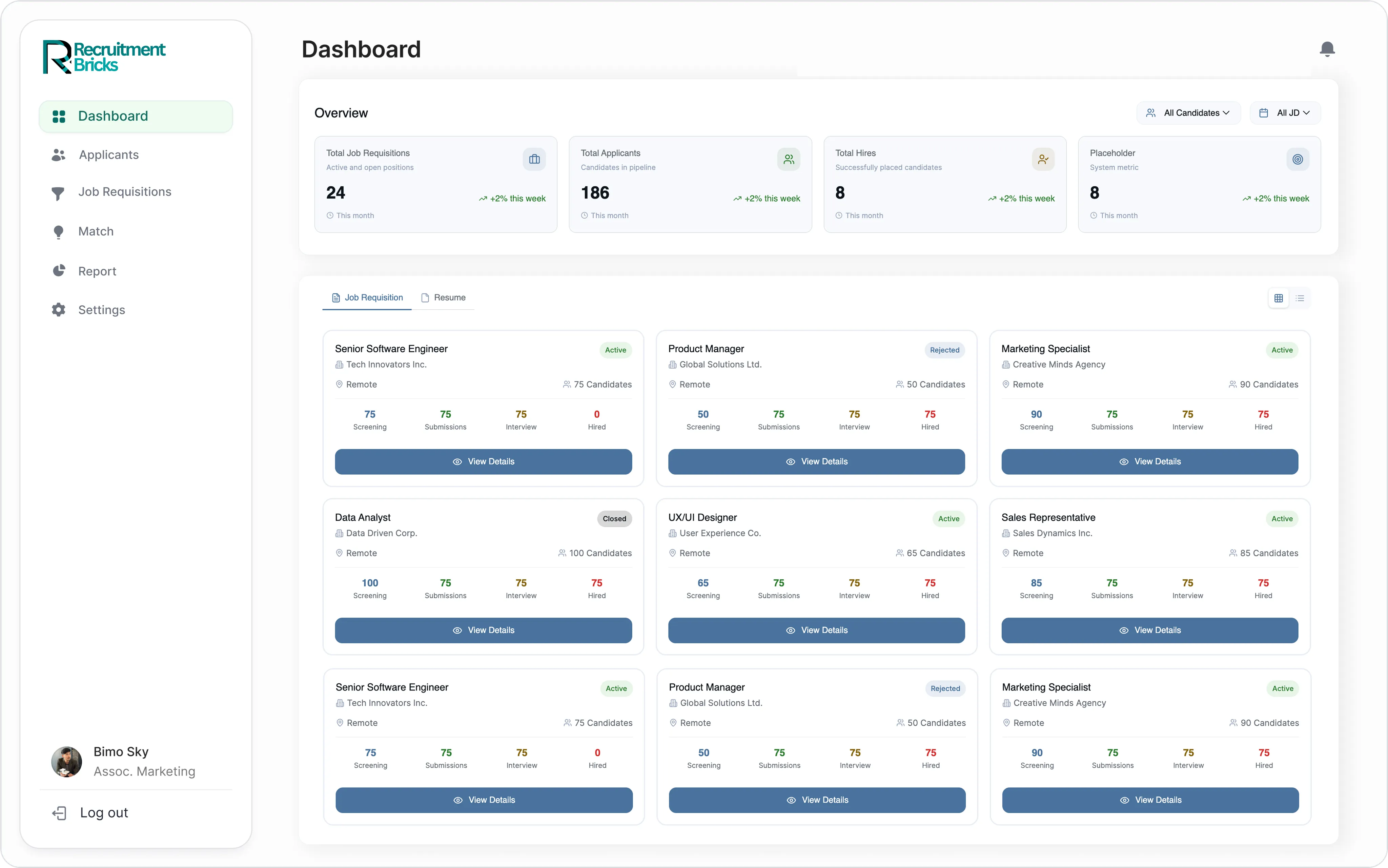
RecruitmentBricks provides engagement optimization dashboards that show exactly where candidates are stalling and why. This allows hiring managers to intervene quickly, adjust sourcing strategies, and prioritize high-conversion channels. Real-time analytics also help CHROs and Talent Acquisition Heads report on recruitment performance with confidence, using data rather than anecdote.
The Role of the AI Hiring Process in Reducing Bias
A fair AI hiring process is not just an ethical priority, it is a conversion driver. When candidates trust that the process is transparent and merit-based, they are more likely to complete assessments, attend interviews, and accept offers. Bias in early screening stages can cause qualified diverse candidates to disengage before they even reach a hiring manager.
RecruitmentBricks uses explainable AI match scores designed to reduce bias in resume evaluation. Every score comes with a clear rationale, so recruiters understand why a candidate ranked highly and can verify the reasoning. This transparency builds candidate trust and helps organizations build more equitable pipelines. It is important to note that AI reduces bias but does not eliminate it entirely. Human judgment remains essential at every stage.
Internal Mobility as a Conversion Strategy
Many organizations focus exclusively on external hiring and overlook a powerful source of high-quality candidates sitting right inside their own workforce. Internal mobility programs match existing employees to open roles before searching externally, which improves fill rates, boosts employee retention, and reduces sourcing costs.
RecruitmentBricks supports this through reverse resume matching, which unifies external hiring and internal talent mobility in a single platform. When a new role opens, the system surfaces internal candidates who may be qualified and ready for advancement. This approach converts internal applicants at a much higher rate than external ones because they already know the organization, culture, and expectations.
Integrating Your AI Hiring Platform With Existing Tools
One of the most common barriers to AI adoption in recruitment is concern about disrupting existing workflows. HR teams have invested in ATS, HRMS, and CRM systems and do not want to abandon them. A well-built AI hiring platform solves this by integrating seamlessly with the tools you already use.
RecruitmentBricks is designed to connect with existing ATS and HRMS platforms, meaning you do not need to replace your current infrastructure to benefit from AI-powered screening, engagement, and analytics. You can explore available integration options to see how RecruitmentBricks fits into your current tech stack. This modular approach means you can adopt features gradually, starting with the areas where conversion improvement is needed most.
Conclusion
An AI hiring platform is no longer a luxury reserved for large enterprises. It is a practical solution for any organization that wants to improve conversion rates, reduce time-to-hire, and create a better experience for both recruiters and candidates. From smarter screening and automated engagement to real-time pipeline analytics and internal mobility, AI transforms every stage of the funnel. RecruitmentBricks is built specifically to help recruitment teams take action faster, engage candidates better, and convert more of the right people into successful hires. Request a demo today and see how it can work for your team.
FAQ
What is an AI hiring platform?
An AI hiring platform uses artificial intelligence to automate screening, scheduling, and candidate engagement throughout the recruitment process. It helps recruiters make faster, data-backed decisions while reducing manual workload and improving conversion rates at every funnel stage.
How does an AI hiring platform improve conversion rates?
It improves conversions by automating follow-ups, reducing response times, and keeping candidates engaged between stages. Features like VoiceBot screening, WhatsApp outreach, and self-scheduling remove friction that causes candidates to drop off before reaching the offer stage.
What are the best candidate engagement strategies for reducing drop-off?
The most effective candidate engagement strategies include automated WhatsApp communication, instant feedback after assessments, self-scheduling links, and personalized nudges. These touchpoints keep candidates informed and interested, reducing the chance they accept a competing offer before your process completes.
Can an automated hiring platform integrate with existing ATS systems?
Yes. A well-designed automated hiring platform like RecruitmentBricks connects with existing ATS, HRMS, and CRM tools. You can learn more about available connections on the integrations page without needing to replace your current recruitment infrastructure.
How does a hiring management system support data-driven decisions?
A hiring management system provides real-time dashboards showing pipeline health, sourcing effectiveness, and candidate engagement metrics. This data allows recruiters and HR leaders to identify bottlenecks quickly, adjust strategies, and report on recruitment performance with accuracy and confidence.
Does AI in the hiring process eliminate bias entirely?
No. AI reduces bias by applying consistent, explainable match scores to resumes and job descriptions. However, it does not eliminate bias entirely. Human judgment remains essential throughout the process to ensure fair and culturally informed hiring decisions at every stage.
What is a candidate engagement platform?
A candidate engagement platform is a tool that automates communication and interaction with job applicants. It sends reminders, collects feedback, schedules interviews, and maintains consistent outreach so candidates stay engaged and informed throughout the entire recruitment journey.
How does internal mobility connect to an AI hiring platform?
An AI hiring platform can use reverse resume matching to identify internal employees who qualify for open roles before searching externally. This improves fill rates and retention while reducing sourcing costs and time-to-hire for organizations of any size.
How long does it take to implement an AI hiring platform?
Implementation timelines vary based on the size of your organization and the features you adopt. A modular platform allows you to start with one or two capabilities and expand gradually. Integration with existing ATS and HRMS tools typically accelerates the onboarding process significantly.
Is an AI hiring platform suitable for small businesses?
Yes. Modular AI hiring platforms are designed to scale with organizations of all sizes. Small businesses can start with core features like automated screening or candidate engagement and add capabilities as their hiring volume grows, making it a cost-effective solution from the beginning.