Introduction
Hiring is no longer just a support function. It is a direct driver of revenue, productivity, and long-term business competitiveness. Yet many organizations still depend on slow, manual processes that cannot keep pace with growth. AI hiring software gives CHROs the tools to close that gap. It transforms talent acquisition from a reactive, administrative burden into a strategic, performance-driven function. In this guide, you will discover how AI reduces time-to-fill, improves quality of hire, supports internal talent mobility, and delivers the measurable ROI that boards and executive teams expect from modern HR leadership.
Key Takeaways
- AI hiring software automates screening, scheduling, and candidate engagement to significantly reduce time-to-fill across all role types.
- Hiring automation software uses explainable AI match scores to improve quality of hire and reduce unconscious bias at every shortlisting stage.
- CHROs who invest in an automated hiring platform gain real-time pipeline intelligence to align talent acquisition directly with business growth objectives.
Why CHROs Are Rethinking Talent Acquisition in 2026
The modern CHRO faces growing boardroom pressure to prove the business value of every talent acquisition decision, and traditional recruitment methods are no longer up to the task.
The role of the CHRO has shifted considerably. Boards and executive teams now expect HR leaders to speak in business terms, not HR terms. Metrics like cost per hire, recruiter productivity, and quality of hire are no longer just operational benchmarks. They are strategic KPIs tied to growth and profitability. At the same time, candidate expectations have changed. Talent moves faster, competition for skilled professionals has intensified, and the cost of a poor or slow hiring decision has never been higher.
This is where AI hiring software delivers its most immediate impact. It replaces manual, time-intensive workflows with intelligent automation that learns from data and improves with each hiring cycle. The strongest platforms do not replace recruiters. They amplify what recruiters do best, freeing them to focus on candidate relationships, workforce planning, and strategic advisory work. According to a 2024 LinkedIn Talent Trends report, 74% of talent professionals say AI tools have measurably improved their hiring workflows. For a CHRO, this shift is the difference between a reactive HR team and a proactive talent engine that serves the entire business.
How AI Hiring Software Accelerates Time-to-Fill
Every day a critical role goes unfilled carries a real productivity cost, and AI attacks every stage of the recruitment funnel to close that gap faster.
Time-to-fill is one of the most closely watched KPIs in talent acquisition. According to the Society for Human Resource Management (SHRM), the average time-to-fill across industries sits at approximately 42 days. In high-growth sectors, even a two-week delay can disrupt project delivery and slow revenue generation. AI hiring software reduces this number by automating the most time-consuming parts of the process.
AI-powered VoiceBots can conduct structured pre-screening interviews with large candidate volumes simultaneously, without requiring any recruiter involvement. Auto-scheduling tools remove the coordination delays between candidates and hiring managers. Automated follow-ups and engagement nudges keep the pipeline moving and reduce candidate drop-off. RecruitmentBricks combines these capabilities into a single, integrated workflow. The platform reports up to 60% faster time-to-hire by deploying these automation layers across sourcing, screening, and candidate engagement. For a CHRO, that acceleration translates directly into lower recruitment costs, faster team productivity, and stronger business continuity across every department.
Improving Quality of Hire With Hiring Automation Software
Faster hiring is only valuable when the right people are being selected, and hiring automation software ensures every decision is grounded in structured, transparent, and bias-resistant data.
Quality of hire is the metric that ultimately defines the long-term success of a recruitment strategy. A poor hiring decision can cost an organization between 30% and 150% of that employee's annual salary, according to SHRM research. Manual screening processes are inconsistent and vulnerable to unconscious bias. Recruiters reviewing large volumes of resumes under time pressure often default to familiarity rather than genuine role fit.
Hiring automation software addresses this directly by introducing explainable AI match scores. These scores evaluate each candidate against the specific requirements of the job description using structured, consistent criteria. The scoring is transparent and fully auditable, meaning hiring managers can understand exactly why a candidate ranked highly. This approach reduces the influence of subjective judgment and creates a more equitable shortlisting process across all roles. Organizations that apply these tools consistently report stronger workforce performance and measurably lower early attrition rates, both of which directly improve quality of hire at scale.
Driving Internal Mobility With HR Automation Software
The most cost-effective source of talent in any organization is often already on the payroll, and HR automation software makes it far easier to identify and activate that potential before looking externally.
External hiring carries significant cost. Recruitment fees, onboarding investment, and the productivity ramp-up period add up quickly, especially for senior or specialized roles. HR automation software with reverse resume matching capabilities allows organizations to automatically align internal talent profiles with open positions. This reduces reliance on external sourcing and directly improves employee retention at the same time.
By unifying external hiring and internal talent mobility within a single automated hiring platform, CHROs gain a complete picture of talent supply across the entire business. This supports more informed workforce planning decisions at every level. When a business unit needs to scale quickly, HR leaders can surface internal candidates who already understand the culture, the systems, and the strategic direction of the organization. Reducing external hiring by even 15% to 20% can produce meaningful annual savings for mid-to-large organizations. Internal mobility also signals to employees that meaningful career growth exists within the company, which is a proven driver of long-term retention.
Building a Measurable ROI Framework for AI Hiring Tools
Justifying AI investment to a board or executive team requires CHROs to define clear success metrics before deployment and track them consistently throughout the implementation lifecycle.
A structured ROI framework is essential for any HR technology investment. Before deploying an AI hiring solution, CHROs should identify the specific outcomes they plan to measure and set baseline values for each.
The following five metrics form a strong starting point for any ROI conversation:
- Reduction in time-to-fill: Compare average days to hire before and after AI implementation across role categories.
- Cost per hire: Calculate total recruitment spend divided by the number of successful hires in each reporting period.
- Quality of hire: Use 6-month and 12-month performance ratings along with retention data to assess the outcome quality of each cohort.
- Recruiter productivity: Measure the number of roles managed per recruiter per quarter and the proportion of time spent on administrative versus strategic work.
- Candidate engagement rate: Track response rates across sourcing and outreach channels to assess overall pipeline health.
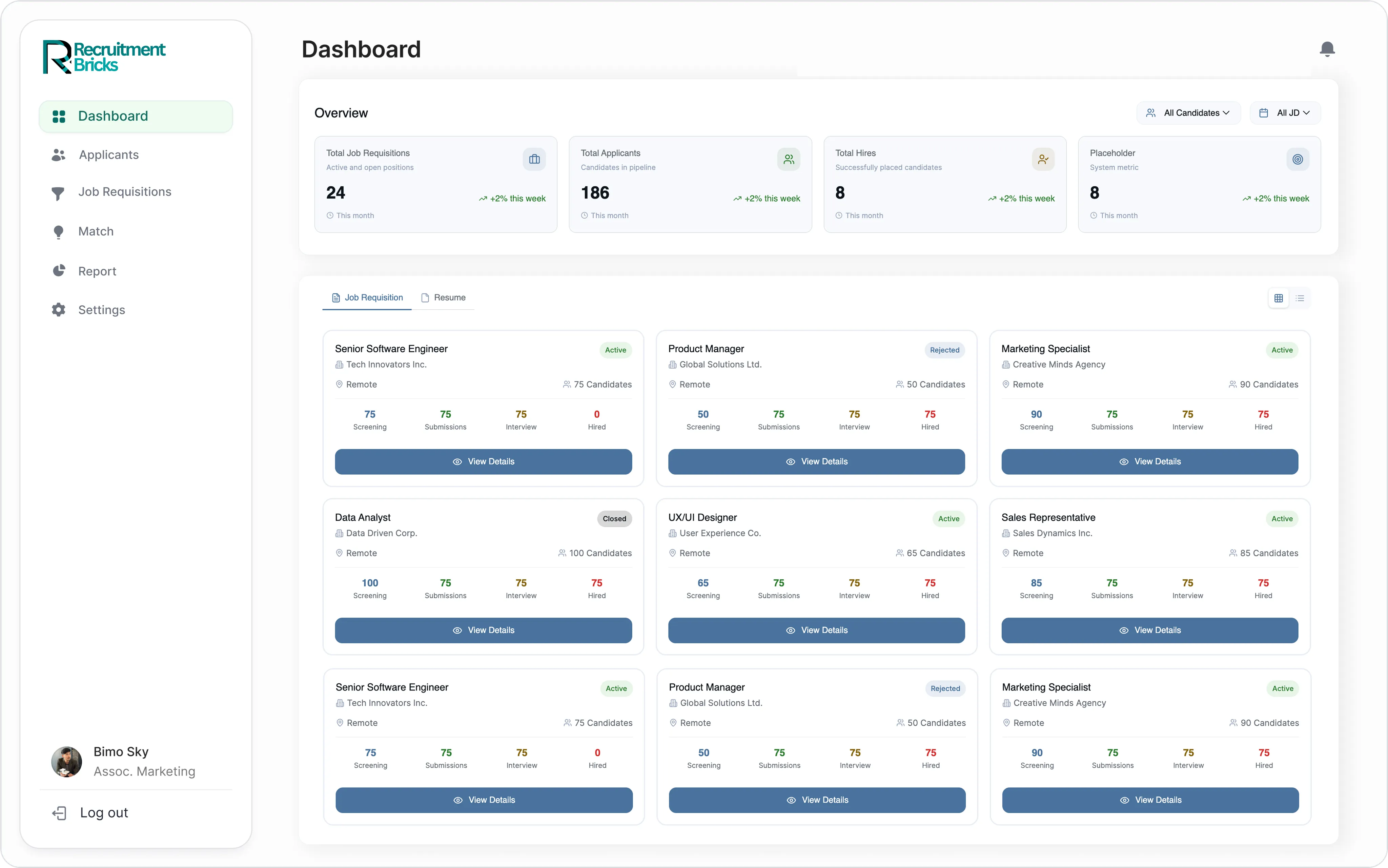
Platforms with built-in pipeline intelligence dashboards allow CHROs to monitor all five metrics in real time, without manual reporting overhead. This data enables HR leaders to report on recruitment performance in business terms, not just HR terms. When the board asks what the talent function contributes to company growth, these metrics provide a credible, precise, and timely answer. For CHROs evaluating how AI tools will connect with their current systems, exploring integration capabilities is a valuable early step in the technology assessment process.
Conclusion
AI hiring software is one of the most impactful investments a CHRO can make today. It reduces time-to-fill, improves quality of hire, enables smarter internal mobility, and delivers the kind of measurable ROI that resonates at board level. Talent acquisition is no longer a back-office function. With the right technology, it becomes a genuine competitive advantage for the entire organization. If you are ready to see what an automated hiring platform can do for your team, request a demo with RecruitmentBricks and build a recruitment function that drives real, visible business results.
FAQ
What is AI hiring software and how does it work?
AI hiring software uses machine learning to automate recruitment tasks like candidate screening, resume parsing, and interview scheduling. It evaluates applicants using structured AI match scores, enabling recruiters to make faster, more consistent, and bias-reduced hiring decisions that improve overall recruitment outcomes.
How does AI hiring software improve quality of hire?
It replaces subjective resume reviews with explainable AI match scores that evaluate candidates against specific job requirements using consistent, structured criteria. This reduces unconscious bias and ensures every shortlisting decision is grounded in auditable, data-backed reasoning rather than recruiter intuition alone.
What ROI can CHROs realistically expect from AI recruitment tools?
CHROs can expect measurable improvements in time-to-fill, cost per hire, and retention rates. Platforms like RecruitmentBricks report up to 60% faster time-to-hire, which directly reduces productivity loss and recruitment spend. The RecruitmentBricks approach is grounded in human-assisted AI designed to deliver outcomes that boards can quantify.
How does AI reduce time-to-fill in the recruitment process?
AI automates the most time-consuming recruitment steps, including structured VoiceBot screening, auto-scheduling interviews, and sending engagement follow-ups. These tools eliminate manual coordination delays and allow recruiters to manage higher volumes without proportionally increasing headcount or administrative workload.
What is the difference between hiring automation software and a traditional ATS?
A traditional ATS tracks and stores candidate data. Hiring automation software actively automates tasks like screening, scoring, and outreach using AI. It adds intelligence and action on top of storage, enabling recruiters to move faster and make better decisions with less manual effort per hire.
How does HR automation software help reduce unconscious bias in hiring?
HR automation software evaluates every candidate against the same structured criteria using AI match scores. Decisions are transparent and auditable, removing the variability of subjective judgment. This creates a more equitable shortlisting process and actively supports diversity hiring goals across roles and departments.
Can AI hiring tools support internal talent mobility alongside external recruitment?
Yes. AI platforms with reverse resume matching automatically align internal talent profiles with open roles, unifying external hiring and internal mobility in one system. This reduces external sourcing costs, supports employee retention, and helps CHROs make smarter workforce planning decisions. HR technology events focused on talent innovation often highlight this capability as a top priority for forward-looking organizations.
What metrics should CHROs track to measure AI recruitment ROI?
CHROs should measure time-to-fill, cost per hire, quality of hire using performance and retention data, recruiter productivity, and candidate engagement rates. Together, these five metrics build a board-ready picture of how AI-powered recruitment contributes to broader organizational growth and business performance.
How does an automated hiring platform integrate with existing ATS and HRMS tools?
Most automated hiring platforms connect with existing ATS, HRMS, and CRM systems via standard API integrations. This allows organizations to layer AI capabilities on top of current infrastructure, reducing implementation risk while enabling a phased, low-disruption approach to recruitment transformation.
Is AI hiring software suitable for large enterprises with complex hiring pipelines?
Answer: Yes, AI hiring software is particularly well-suited for large enterprises managing high-volume or geographically distributed hiring. It scales across business units, supports multi-location sourcing, and provides centralized analytics that give CHROs unified visibility into recruitment performance across the entire organization.