For many businesses, the ATS for SMEs and enterprises conversation begins the same way: a hiring team struggling with slow pipelines, missed candidates, and clunky workflows. Applicant tracking software was once a reliable solution. But as organizations grow and hiring demands evolve, legacy ATS systems often become the very bottleneck they were meant to eliminate. This blog explores the signs of a failing ATS, the real cost of sticking with outdated tools, and what modern platforms bring to the table.
Key Takeaways
- Legacy ATS tracking systems create hiring delays through poor automation, limited integrations, and rigid workflows that cannot scale.
- Modern applicant tracking software offers scalable workflows, real-time analytics, and seamless integration with recruitment tools used daily.
- Upgrading your applicant tracking system software directly improves recruiter productivity, candidate experience, and overall hiring outcomes for both SMEs and enterprises.
Signs Your ATS Is Limiting Hiring Performance
Most HR teams do not realize their ATS for recruiters is holding them back until the damage is already visible. Slow candidate response times, high drop-off rates during applications, and recruiters managing tasks manually are all early signals. If your team is spending more time on data entry than on building candidate relationships, the system is not working for you.
Other signs include duplicate candidate records, broken integrations with job boards, and an inability to generate meaningful hiring reports. When your ATS tracking system cannot answer basic questions like 'How many candidates dropped off at screening?' or 'Which sourcing channel performs best?' then your data pipeline is already compromised. These inefficiencies directly affect the quality and speed of every hire you make.
The impact is not limited to large enterprises. SMEs often experience these limitations faster because they have smaller teams managing higher workloads per recruiter. When an applicant tracking system software lacks automation or intelligent prioritization, smaller teams bear the full cost of that inefficiency. You can learn more about how AI-powered recruitment tools help teams manage these challenges on the RecruitmentBricks features page.
Challenges with Legacy ATS Systems
Legacy ATS systems were designed for a different era of recruitment. They were built before AI-powered screening, conversational outreach, and real-time analytics became standard expectations. The core problem is that these platforms were never designed to adapt.
Here are the most common challenges organizations face with outdated applicant tracking software:
- Limited automation: Manual screening, scheduling, and follow-up tasks overload recruiters and slow hiring cycles significantly.
- Poor candidate experience: Rigid application forms, lack of mobile optimization, and slow response times frustrate qualified applicants into dropping off.
- Weak integrations: Legacy platforms often fail to connect with modern HRMS, CRM, or communication tools like WhatsApp or email automation systems.
- No intelligent matching: Older best applicant tracking systems rely on keyword filtering rather than contextual or AI-driven resume matching.
- Lack of scalability: As hiring volumes grow, legacy systems slow down, crash, or require expensive manual workarounds.
- Insufficient reporting: Without real-time dashboards, recruiters and HR leaders cannot make data-driven decisions with confidence.
According to research published by SHRM, organizations that rely on outdated hiring technologies report significantly higher recruiter burnout and longer time-to-fill rates compared to those using modern platforms. This is not a minor operational issue. It is a strategic talent risk.
What Modern ATS Systems Offer
The gap between legacy tools and modern applicant tracking software is not just about features. It is about the philosophy behind how recruitment technology is built. Modern platforms are designed to be adaptive, intelligent, and integrated. Here is what they bring to both SMEs and enterprises.
Scalable Hiring Workflows
Modern ATS for SMEs and enterprises are built to grow with the business. Whether you are hiring five people a quarter or five hundred, a scalable system adjusts workflows, permissions, and pipelines without requiring manual reconfiguration. This flexibility means HR teams spend less time managing the tool and more time managing relationships with candidates. Modular platforms allow companies to activate only the features they need, reducing complexity while maintaining functionality. This is particularly valuable for fast-growing organizations where hiring demands shift rapidly across departments and locations.
Integration with Recruitment Tools
One of the most critical advantages of modern best applicant tracking systems is their ability to connect seamlessly with the broader recruitment stack. This includes job boards, HRMS platforms, CRM tools, communication channels like WhatsApp and email, and interview scheduling systems. When your ATS for recruiters operates in isolation, every handoff between tools creates friction and potential data loss. Native and API-based integrations eliminate these gaps. RecruitmentBricks, for example, is built to connect with existing ATS, HRMS, and CRM tools, ensuring that recruitment workflows run end to end without manual data transfer. You can explore available connections on the integrations page.
Advanced Analytics and Tracking
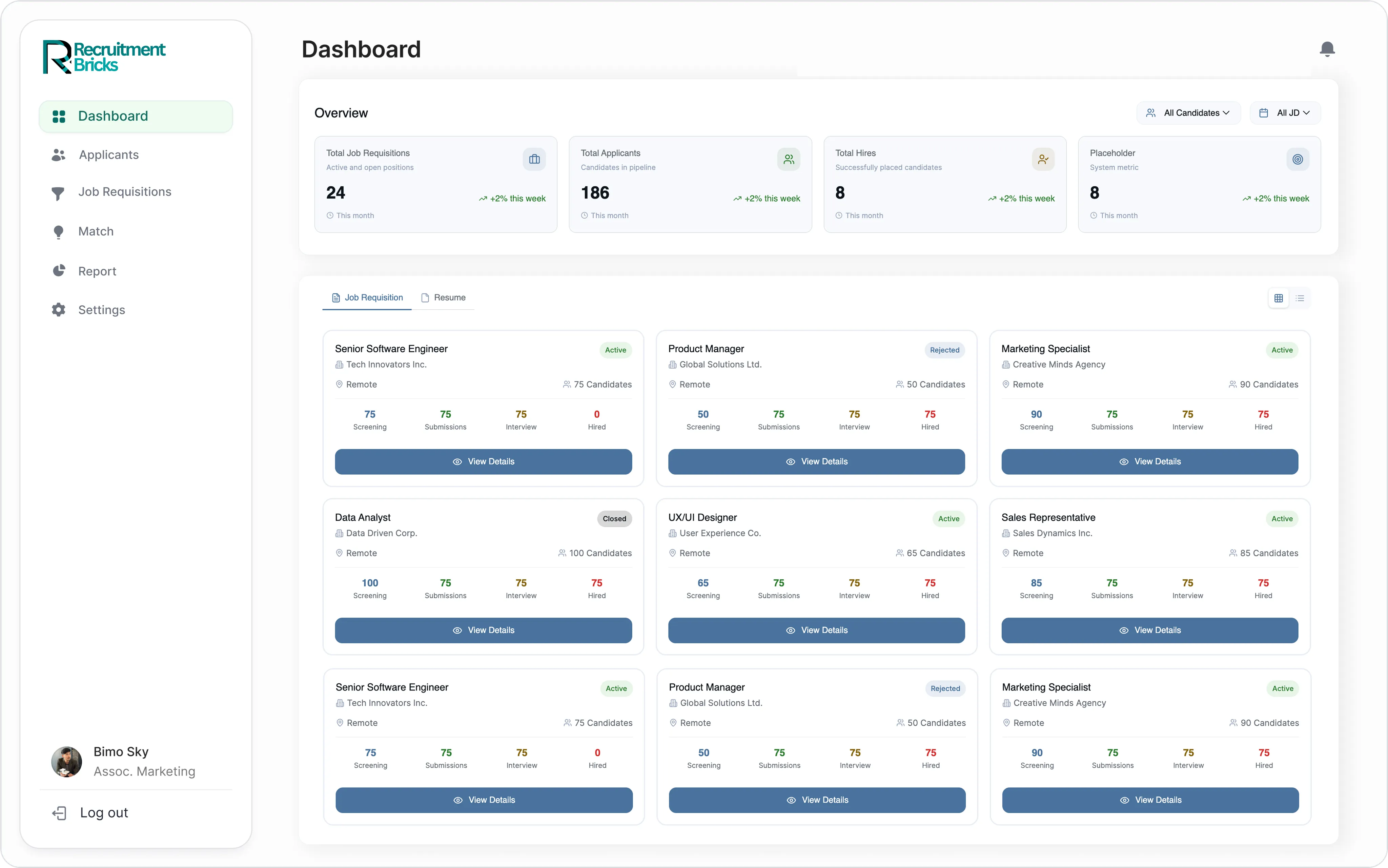
Real-time pipeline analytics are no longer optional. Modern ATS tracking systems provide dashboards that show sourcing effectiveness, candidate drop-off points, time-to-hire by role, and engagement quality. These insights allow HR leaders to make evidence-based decisions rather than relying on instinct. For enterprise teams managing complex, multi-location hiring programs, this level of visibility is essential. Even SMEs benefit significantly from knowing which job boards deliver the best-quality candidates or which screening step causes the most friction. Advanced analytics transform recruitment from a reactive process into a strategic function. A detailed look at how AI recruitment platforms support enterprise hiring teams is available in this post on AI recruitment software for enterprise teams.
Business Impact of Upgrading Your ATS
Upgrading from a legacy system to a modern applicant tracking system software has measurable effects on business performance. Here is what organizations typically experience after making the transition.
Improved recruiter efficiency: Automation handles repetitive tasks like screening, scheduling, and follow-up, giving recruiters more time to focus on high-value interactions with candidates and hiring managers.
Faster time-to-hire: Streamlined pipelines and intelligent candidate prioritization reduce the number of days between posting a job and making an offer. RecruitmentBricks reports that the platform supports up to 60% faster time-to-hire for teams using its AI-powered features.
Better candidate experience: Modern platforms enable timely communication, mobile-friendly applications, and personalized outreach, all of which reduce drop-off and improve employer brand perception.
Reduced cost-per-hire: By surfacing the right candidates faster and reducing time spent on manual tasks, organizations optimize recruiting resources and reduce dependency on expensive external agencies.
Stronger hiring decisions: Explainable AI match scores and data-backed candidate comparisons lead to more confident and consistent hiring decisions across the organization.
What to Look for in an ATS
Choosing the right applicant tracking software is a strategic decision that should align with both current needs and future growth plans. When evaluating options, consider the following criteria:
- AI-powered screening: Look for platforms that go beyond keyword matching to offer contextual resume scoring and voice-based pre-screening capabilities.
- Modular architecture: The ability to adopt specific features without overhauling your entire tech stack is a significant advantage for growing businesses.
- Integration capability: Confirm that the ATS connects natively with your existing HRMS, job boards, and communication tools without requiring custom development.
- Real-time analytics: Ensure the platform offers dashboards and reporting that are actionable, not just decorative.
- Candidate engagement tools: Features like automated WhatsApp outreach, interview scheduling, and feedback nudges are becoming standard expectations.
- Scalability: The system should handle increased hiring volumes without degrading performance or requiring manual workarounds.
- Vendor support and roadmap: Choose a vendor with an active development roadmap and responsive support team. Platforms like RecruitmentBricks publish updates through a public changelog so customers can track improvements in real time.
For an independent benchmark of what modern platforms should offer, Gartner regularly publishes research on HR technology trends and ATS evaluation criteria that can help HR leaders make more informed purchasing decisions.
Time to Rethink Your Recruitment Technology
If your current ATS for SMEs and enterprises is creating more friction than it resolves, the cost of staying with it is already real. Recruiter burnout, slow pipelines, poor candidate experiences, and missed hiring targets are all consequences of tools that have not kept pace with modern recruitment demands. The right applicant tracking software does not just manage candidates. It empowers recruiters, generates actionable insights, and scales alongside your business. Whether you are a growing SME or a large enterprise, modernizing your ATS systems is a foundational step toward building a hiring function that actually drives business results. To see how RecruitmentBricks can support your team, request a demo and explore what a modern, AI-powered recruitment platform looks like in action.
FAQs
1: What is the main difference between legacy ATS systems and modern applicant tracking software?
Legacy ATS systems rely on static keyword filtering, manual workflows, and limited integrations. Modern applicant tracking software uses AI-driven matching, automation, and real-time analytics to help recruiters move faster and make better hiring decisions without manual effort slowing the process.
2: How do I know if my current ATS is limiting hiring outcomes?
Common signs include high candidate drop-off rates, manual data entry tasks, broken integrations with job boards, and an inability to generate real-time hiring reports. If your recruiter team spends more time managing the tool than engaging candidates, your ATS tracking system needs a review.
3: Can small businesses benefit from upgrading their applicant tracking system software?
Absolutely. SMEs often feel the impact of a weak ATS for recruiters more acutely because smaller teams manage higher workloads. Modern applicant tracking system software with automation and intelligent prioritization allows lean HR teams to compete effectively for top talent without burning out their staff.
4: What features should the best applicant tracking systems include?
The best applicant tracking systems should include AI-powered screening, scalable workflows, seamless integrations with HRMS and CRM tools, real-time analytics dashboards, candidate engagement features like WhatsApp outreach, and modular architecture that lets businesses adopt only the features they currently need.
5: How does poor ATS integration affect recruitment outcomes?
When an ATS tracking system cannot connect with HRMS, job boards, or communication tools, every handoff between platforms creates data loss and delays. Recruiters spend valuable time on manual data transfer instead of candidate engagement, which ultimately slows hiring cycles and increases the risk of losing qualified applicants.
6: Is it difficult to migrate from a legacy ATS to a modern platform?
Migration complexity varies by platform and data volume. Most modern applicant tracking software providers offer onboarding support and API-based data migration tools. Teams exploring AI-powered recruitment platforms like RecruitmentBricks can review available recruitment tool integrations to assess compatibility with existing systems before committing to a transition.
7: How does an ATS for SMEs differ from an enterprise ATS?
The core functionality is similar, but enterprise ATS systems require more robust role-based permissions, multi-location pipeline management, and advanced compliance features. SME-focused platforms prioritize ease of setup and cost efficiency. The best modern platforms serve both segments through modular, scalable architecture that adapts to organizational size and complexity.
8: What role does AI play in modern applicant tracking software?
AI powers several critical functions in modern platforms, including resume parsing, contextual candidate matching, voice-based pre-screening, and predictive pipeline analytics. These capabilities allow ATS for recruiters to surface the right candidates faster, reduce manual screening time, and support more consistent and data-backed hiring decisions across the organization.
9: How does a modern ATS improve the candidate experience?
Modern applicant tracking system software supports mobile-friendly applications, automated follow-up messages, and personalized outreach through channels like WhatsApp. Faster response times and transparent communication reduce candidate drop-off and improve employer brand perception. Teams exploring best practices can find useful perspectives through the RecruitmentBricks recruitment technology blog.
10: What should HR leaders evaluate when selecting a new ATS?
HR leaders should assess AI screening capabilities, integration flexibility with existing tools, real-time reporting depth, vendor support quality, and platform scalability. Evaluating the vendor roadmap is also important. Look for platforms that actively publish feature updates and improvements so your team benefits from continuous enhancements as recruitment technology evolves.