As companies expand rapidly, recruitment automation software becomes the operational backbone of any high-performing talent team. Traditional hiring methods simply cannot scale alongside business growth. Manual resume reviews, fragmented communication, and slow scheduling create delays that cost organizations top candidates and valuable time. This blog explores how modern automation transforms every stage of the hiring process, what capabilities matter most for fast-growing teams, and how AI-driven platforms are helping talent leaders build hiring systems that scale without breaking.
Key Takeaways
- Recruitment automation software removes manual effort from sourcing, screening, scheduling, and candidate communication at scale.
- AI-powered tools like VoiceBots and explainable match scores increase screening accuracy and reduce hiring bias across all role types.
- A customizable hiring workflow adapts automation to any role type, volume, or hiring stage, giving talent teams full control over how the process runs.
Why High-Growth Teams Hit a Wall Without Recruitment Process Automation
As hiring volumes surge, manual processes create compounding delays that cost talent teams top candidates and critical time. Without recruitment process automation, even experienced recruiters spend the majority of their day on tasks that generate little strategic value. Bottlenecks build at every stage, from screening backlogs to slow interview coordination, and candidate drop-off rates climb as a result.
High-growth organizations can go from 20 to 200 open roles within months. That kind of acceleration exposes every inefficiency in a manual hiring process. According to the Society for Human Resource Management (SHRM), the average time to fill a position is approximately 36 days. For fast-growing teams, every extra day a critical role remains open has a direct business impact. Automation compresses this timeline by instantly handling routine tasks, including resume screening, candidate scoring, and interview scheduling, freeing recruiters to focus on the work that genuinely requires human judgment.
The impact compounds over time. Teams relying on spreadsheets and manual follow-ups face growing inconsistencies as volume increases. Recruitment process automation introduces structure and repeatability across the entire funnel, ensuring every candidate receives a timely, professional experience regardless of hiring volume.
Core Capabilities That Define Effective Recruitment Automation Software
The best recruitment automation software does far more than automate repetitive tasks. It uses artificial intelligence to qualify candidates, generate actionable insights, and guide recruiters toward the right next step. For high-growth teams, the capability gap between basic task automation and a fully AI-driven platform is significant and consequential.
Key features to look for in any recruitment automation platform include:
- AI resume screening and match scoring: Automatically ranks candidates against job descriptions using weighted, explainable criteria, reducing reviewer fatigue and unconscious bias.
- VoiceBot-powered screening: Conducts structured screening interviews at scale, scores candidate responses, and flags top applicants without requiring direct recruiter involvement.
- Automated interview scheduling: Eliminates coordination delays by allowing candidates to self-schedule based on real-time availability.
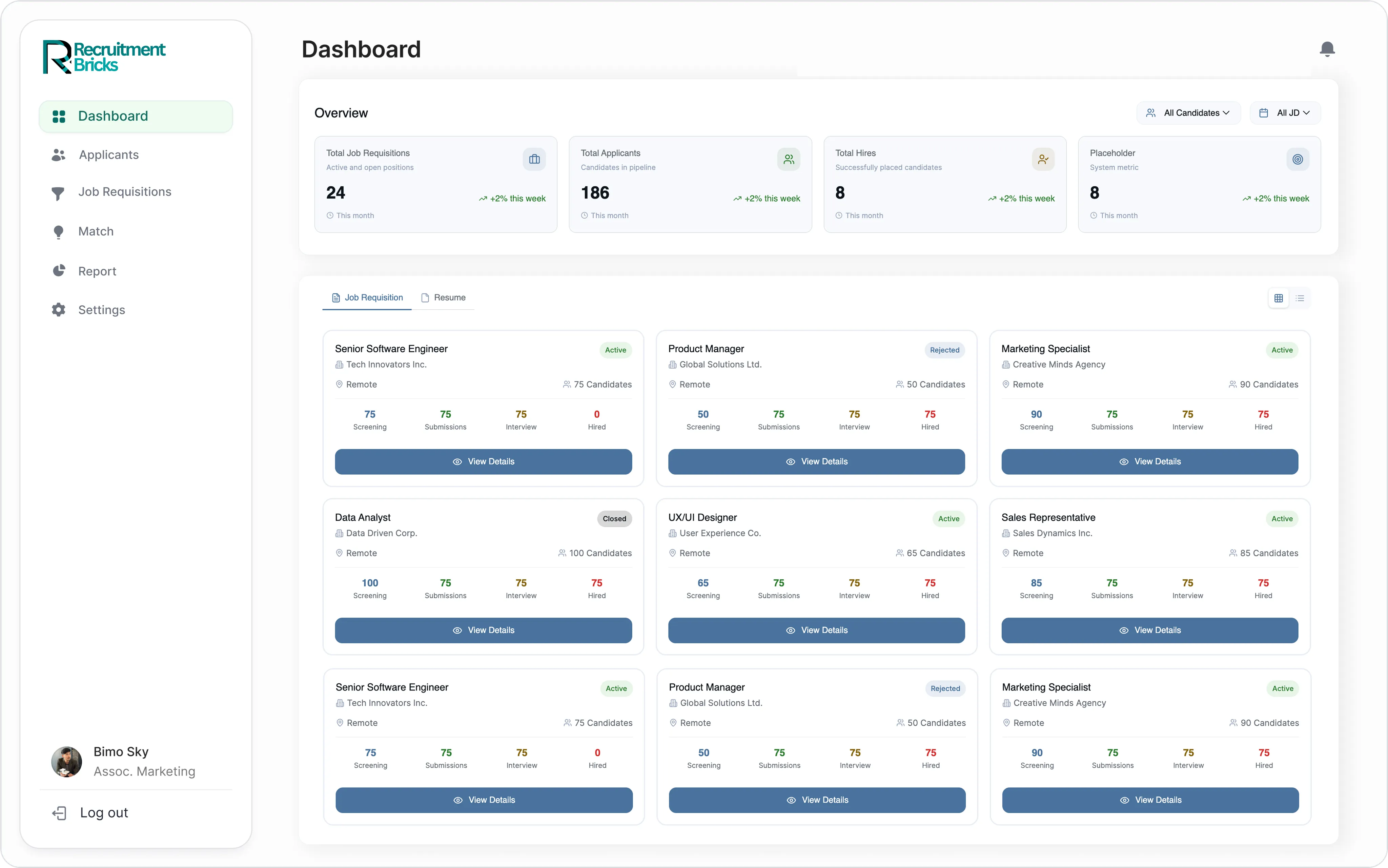
- Pipeline analytics dashboards: Track sourcing effectiveness, candidate drop-off points, and engagement rates in real time to support data-driven decisions.
Explore the AI-powered recruitment features available on modern platforms to understand what your team can realistically achieve with the right toolset. When every stage of the funnel operates on intelligent automation, recruiters gain the capacity to manage significantly higher volumes without adding headcount.
How HR Automation Tools Eliminate Bottlenecks Across the Hiring Funnel
Hiring stalls in predictable places. Interview coordination delays, slow follow-up communication, and missed candidate touchpoints are among the most common reasons qualified applicants disengage before completing the process. HR automation tools address each of these failure points systematically, keeping candidates moving without requiring constant recruiter input.
Automated interview scheduling removes the coordination burden entirely. Candidates receive a self-scheduling link immediately after screening, cutting average scheduling time from days to minutes. WhatsApp outreach tools maintain candidate engagement between stages, sending status updates and next-step prompts automatically. Feedback nudges and instant follow-ups ensure no applicant feels ignored during the hiring process.
These touchpoints matter more than most recruiting teams realize. A consistent, timely communication cadence directly influences offer acceptance rates and candidate satisfaction scores. When HR automation tools handle the operational layer, recruiters are freed to focus on relationship-building and offer negotiation, the conversations that actually win top talent in competitive hiring markets.
Why a Customizable Hiring Workflow Is Non-Negotiable for Scaling Teams
A customizable hiring workflow is what separates genuinely useful automation from frustrating, rigid software. No two roles, departments, or organizations hire exactly the same way. Platforms that apply one-size-fits-all logic to every position create as many problems as they solve, particularly as hiring needs diversify during periods of rapid growth.
The difference becomes clear when comparing hiring scenarios side by side:
- A technology company filling senior engineering positions needs technical screening criteria, multi-stage assessments, and structured competency interviews.
- A logistics company hiring warehouse staff at volume needs fast-turnaround screening, availability-based scheduling, and high outreach capacity.
- A healthcare organization hiring clinical staff needs compliance-aware workflows with specific documentation and credential verification steps.
RecruitmentBricks is built on a modular architecture, inspired by the idea of stackable bricks, where talent teams select and configure only the features relevant to their current hiring priorities. This approach allows organizations to start with the capabilities they need today and expand as hiring demands evolve. Teams can also connect their existing ATS, HRMS, and CRM systems through seamless integrations, ensuring automated workflows align fully with the systems already in place.
Flexibility at the workflow level is not simply a feature preference. It determines whether an automation investment delivers sustained value or gets abandoned the moment edge cases emerge.
Measuring the Business Impact of Recruitment Automation on Talent Teams
The ROI of recruitment automation software becomes visible quickly, particularly for talent teams managing volume hiring across multiple roles, departments, and locations. Faster hiring cycles, higher recruiter productivity, and improved candidate quality all contribute to measurable, compounding business outcomes over time.
RecruitmentBricks reports that its AI-powered platform has supported the matching of over 100,000 candidates and contributed to a 60% faster time-to-hire for teams leveraging its full feature set. These results emerge from combining automated screening, intelligent scheduling, and real-time pipeline visibility into a single connected workflow rather than relying on disconnected point solutions.
According to LinkedIn's Global Talent Trends report, organizations that invest in recruitment technology report significant improvements in both hiring speed and candidate experience scores. For high-growth teams, these gains compound across every hiring cycle, creating a structural advantage that becomes increasingly difficult for competitors relying on manual processes to close. The question is no longer whether to automate hiring, but how quickly your team can build that capability.
Conclusion
Recruitment automation software is the strategic foundation that allows high-growth talent teams to scale hiring without sacrificing quality, speed, or candidate experience. From recruitment process automation that eliminates pipeline bottlenecks to HR automation tools that keep candidates engaged at every touchpoint, the right platform removes the friction that holds talent teams back from performing at their full potential. A customizable hiring workflow ensures the software serves your process rather than the other way around. If your organization is ready to build a faster, smarter, and more scalable hiring engine, request a demo with RecruitmentBricks and see what action-enabled recruitment delivers in practice.
FAQ
What is recruitment automation software?
Recruitment automation software is a technology platform that automates repetitive hiring tasks such as resume screening, candidate scoring, interview scheduling, and follow-up communication. It helps talent teams manage higher hiring volumes with greater speed, consistency, and accuracy, which is central to how RecruitmentBricks was built as an action-enabled platform.
How does recruitment automation software reduce time-to-hire?
By automating screening, scoring, and scheduling simultaneously, recruitment automation software removes the manual delays that slow hiring pipelines. Tasks that previously took days complete in minutes, allowing talent teams to move qualified candidates to offer stage significantly faster than traditional hiring methods allow.
What features should recruitment automation software include?
Effective platforms should include AI resume matching, VoiceBot screening, automated interview scheduling, candidate engagement tools like WhatsApp outreach, and real-time pipeline analytics. These features work together to qualify candidates, maintain engagement, and give recruiters full visibility across every open role without manual tracking.
How does recruitment process automation improve candidate experience?
Recruitment process automation ensures candidates receive timely responses, clear communication, and fast scheduling at every stage. Automated follow-ups, instant feedback nudges, and self-scheduling options eliminate waiting periods that frustrate applicants, improving engagement rates and strengthening the employer brand throughout the hiring process.
Is recruitment automation software suitable for small and mid-sized businesses?
Yes. Modular recruitment automation platforms allow smaller organizations to adopt only the features they currently need and expand as hiring demands grow. This approach prevents over-investment in capabilities that are not yet necessary, making automation accessible and cost-effective for businesses at any stage of growth.
What is a customizable hiring workflow and why does it matter?
A customizable hiring workflow allows talent teams to define their own screening rules, communication sequences, and automation logic for each role type. This flexibility ensures the platform adapts to your hiring process rather than forcing your team to change how they work to accommodate rigid software limitations.
How do HR automation tools reduce bias in the hiring process?
HR automation tools use explainable AI scoring to evaluate candidates against objective, predefined criteria rather than subjective reviewer impressions. This structured approach promotes consistency across evaluations and reduces the influence of unconscious bias, supporting fairer, more data-backed hiring decisions across all roles.
Can recruitment automation software integrate with existing ATS and HRMS tools?
Yes. Modern recruitment automation platforms are built to connect with existing ATS, HRMS, and CRM systems, ensuring automated workflows align with the tools talent teams already use. This integration eliminates data silos and maintains a unified view of candidate and hiring data across the organization.
What results can high-growth talent teams expect from recruitment automation?
High-growth teams using recruitment automation typically see faster time-to-hire, higher recruiter productivity, and improved candidate quality. Platforms like RecruitmentBricks report contributions to a 60% faster time-to-hire and over 100,000 candidates matched. Industry practitioners regularly discuss these outcomes at RecruitmentBricks events focused on AI-driven hiring.
How does VoiceBot technology improve high-volume candidate screening?
VoiceBot technology conducts structured screening interviews autonomously, scoring candidate responses and flagging top applicants without direct recruiter involvement. This capability allows a single recruiter to screen hundreds of candidates simultaneously, dramatically reducing screening time while maintaining consistent evaluation standards across every applicant in the pipeline.