Hiring automation software is no longer a luxury reserved for large enterprises. When different teams evaluate candidates using different criteria, the result is unpredictable talent quality and unfair hiring outcomes. This blog explores why inconsistent hiring decisions are a critical business problem and how structured recruitment automation can enforce fairness, improve scoring consistency, and create scalable evaluation systems that every team can rely on.
Key Takeaways
- Hiring automation software enforces standardized evaluation frameworks across all teams, eliminating subjective and inconsistent assessments while reducing unconscious bias in every hiring decision.
- Intelligent applicant screening software uses AI-powered scoring to objectively rank candidates based on role requirements, ensuring every recruiter applies the same consistent evaluation criteria.
- Adopting artificial intelligence in recruitment and customizable hiring workflows leads to better quality hires, reduced time-to-fill, and a fairer candidate experience across all departments.
Why Hiring Decisions Vary Across Teams
Most organizations assume their hiring process is consistent. The reality is often quite different. Each team lead, department manager, or recruiter brings their own preferences, unconscious biases, and evaluation habits to every interview. Without a shared standard, two candidates with identical qualifications can receive vastly different outcomes depending on who reviews them.
This variation grows more significant as companies scale. A startup with five employees might manage informal hiring without major consequences. But a company hiring across multiple departments or geographies faces serious risk when there is no unified recruitment process automation in place. Inconsistency is not just an HR problem. It affects team performance, workforce diversity, and the overall employer brand.
Research from SHRM consistently highlights that structured hiring processes produce better outcomes than unstructured ones. Yet many organizations still rely on informal methods that vary significantly from team to team.
Risks of Unstructured Hiring Processes
When hiring lacks structure, the consequences extend well beyond a single bad hire. Unstructured processes create several compounding problems that are difficult to reverse once embedded in team culture.
- Inconsistent candidate experience: Candidates applying for similar roles receive wildly different interview experiences depending on the hiring team, damaging your employer brand.
- Unchecked bias: Without defined scoring criteria, hiring managers often rely on gut feeling. This leads to decisions influenced by affinity bias, halo effects, or cultural misalignment.
- Poor role fit: Without structured evaluation, teams hire for personality over skill fit, leading to higher turnover and performance gaps.
- Compliance risk: Inconsistent documentation and evaluation records make organizations vulnerable to legal challenges around discriminatory hiring practices.
- Inability to scale: As teams grow, the lack of a common hiring standard makes quality control nearly impossible across departments and locations.
These risks explain why businesses are increasingly turning to hiring automation software to bring structure, fairness, and predictability into every stage of the recruitment funnel.
How Hiring Automation Software Creates Consistency
Structured automation introduces a systematic approach to every hiring decision. Rather than leaving evaluation criteria to individual interpretation, the software enforces shared standards across all hiring teams. This is how the ai hiring process transforms inconsistency into a scalable system.
Standardized Evaluation Frameworks
One of the most powerful features of hiring automation software is its ability to define and apply evaluation frameworks consistently across all roles. These frameworks set clear criteria for what a qualified candidate looks like. Every recruiter and hiring manager evaluates candidates against the same benchmarks, regardless of personal preference.
This means scorecards, competency ratings, and interview question sets are pre-defined and locked in before a single candidate is assessed. There is no room for ad hoc judgment calls. When every team works from the same structured framework, the quality of hiring decisions improves and becomes defensible with data.
Platforms like RecruitmentBricks are built specifically to support this kind of modular, structured approach. Their philosophy of stackable recruitment modules allows organizations to adopt evaluation frameworks that match their unique role requirements without compromising on consistency.
Intelligent Applicant Screening Software
Intelligent applicant screening software uses artificial intelligence in recruitment to score and rank candidates objectively against job requirements. Instead of relying on a recruiter to manually compare resumes, the AI parses both the job description and candidate profiles to generate explainable match scores.
RecruitmentBricks uses advanced resume and job description matching to surface the most qualified candidates with AI-backed reasoning behind every score. This explainability is critical. Hiring teams can see exactly why a candidate scored well or poorly, which removes ambiguity and builds confidence in the screening process.
The platform's VoiceBot conducts structured voice interviews, applying consistent question sets and scoring criteria regardless of which recruiter initiates the process. This ensures every candidate is evaluated through the same lens, whether they are applying for a role in sales, engineering, or operations. You can explore how this fits into a broader AI recruitment software strategy for enterprise teams to reduce time-to-hire significantly.
Customizable Hiring Workflows
Not every role requires the same hiring journey. A customizable hiring workflow allows organizations to define unique pipelines for different job functions while keeping the underlying evaluation logic consistent. For instance, a technical role might include a coding assessment stage while a customer-facing role prioritizes communication skills evaluation.
With recruitment process automation, these workflows are built once and applied uniformly every time the same role opens. Stages, approval gates, interview rounds, and scoring criteria are all pre-configured. This eliminates the risk of individual teams improvising steps or skipping evaluations that were deemed inconvenient.
RecruitmentBricks takes this further with its modular 'bricks' approach. Teams can assemble workflows from a library of feature blocks, ensuring each pipeline matches the role's demands without deviating from company-wide evaluation standards. Explore the full range of recruitment features that enable this kind of structured workflow design.
Business Impact of Consistent Hiring
When hiring automation software eliminates variability across teams, the business impact becomes measurable and lasting. Consistency in evaluation directly translates into better outcomes across multiple dimensions of talent acquisition.
Better Quality Hires Across All Teams
Standardized evaluation ensures that every team hires to the same quality bar. When scorecards and AI screening tools define what 'qualified' looks like, hiring managers are no longer guessing. The result is a more capable, better-fitted workforce that performs consistently across departments.
RecruitmentBricks reports that organizations using its platform have matched over 100,000 candidates while achieving up to 60% faster time-to-hire. While individual results will vary, this reflects the efficiency that structured automation can deliver when evaluation becomes systematic rather than subjective.
Reduced Bias in Hiring Decisions
Artificial intelligence in recruitment does not eliminate bias entirely. However, it significantly reduces the influence of unconscious human preferences during candidate evaluation. When AI match scores and structured voice interviews replace informal impressions, hiring teams are guided by data rather than intuition.
RecruitmentBricks' explainable AI match scores are designed specifically to surface bias-reduction signals, giving hiring leaders visibility into decision quality. This matters especially for organizations committed to building diverse and inclusive teams. A fair ai hiring process builds long-term trust both internally and with candidates.
What to Look for in Hiring Automation Software
Choosing the right hiring automation software is a strategic decision. The tool you select will shape how your entire organization evaluates and selects talent. Keep these criteria in mind when evaluating your options.
- Explainable AI scoring: Look for platforms where AI match scores come with transparent reasoning, not just numbers. Recruiters need to understand and trust the output.
- Structured interview tools: The platform should support standardized interview question sets and automated scoring, similar to VoiceBot-style screening.
- Customizable workflow design: Every role is different. Your software should allow teams to build unique pipelines without abandoning consistent evaluation logic.
- Integration with existing systems: Seamless connection to your current ATS, HRMS, or CRM tools is non-negotiable. Check available recruitment integrations before committing.
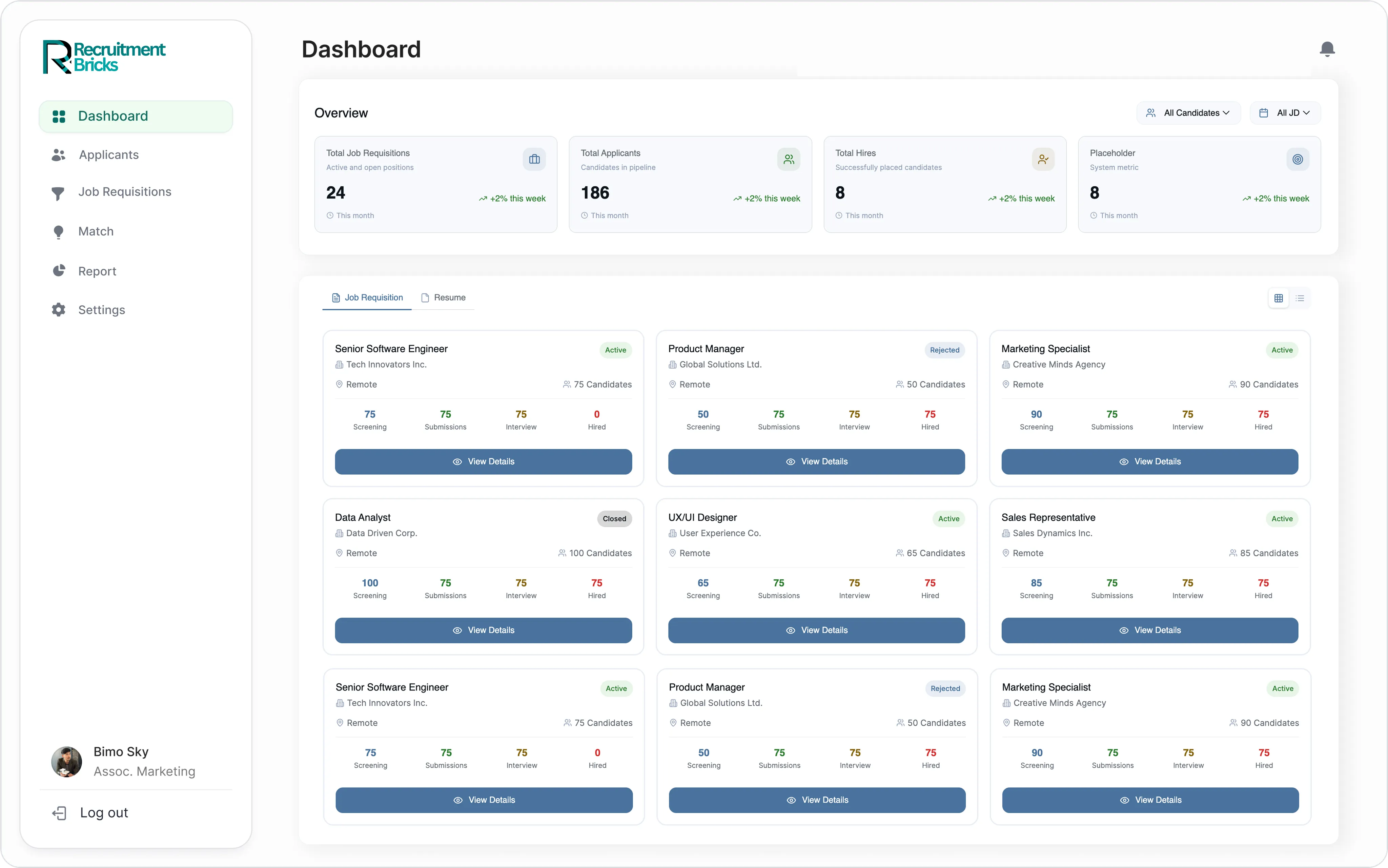
- Pipeline analytics: Real-time dashboards should give hiring leaders visibility into where inconsistencies occur and how pipeline health changes over time.
- Scalability: The platform should handle volume hiring across multiple teams, geographies, and roles without degrading evaluation quality.
Evaluating software against these benchmarks ensures your investment delivers measurable, long-term improvements to hiring quality and fairness.
Conclusion
Hiring automation software is the most effective way to eliminate inconsistent hiring decisions that erode talent quality and fairness across teams. By implementing standardized evaluation frameworks, intelligent applicant screening software, and customizable hiring workflows, organizations gain the structure needed to scale confidently. The ai hiring process is not about removing human judgment. It is about empowering hiring teams with better data, clearer standards, and automated consistency at every stage. If you are ready to bring structure and fairness to your recruitment process, request a demo from RecruitmentBricks and discover how intelligent recruitment automation can transform your hiring outcomes.
FAQs
1: What is hiring automation software and how does it work?
Hiring automation software is a technology platform that standardizes recruitment tasks such as screening, scoring, and interviewing. It uses AI to evaluate candidates against predefined criteria, removing subjectivity from evaluation and ensuring every hiring team follows a consistent, data-driven process across all roles.
2: How does recruitment automation reduce bias in hiring?
Recruitment automation reduces bias by replacing informal impressions with structured scoring criteria and AI-generated match scores. Tools like explainable AI ranking and standardized voice interviews ensure candidates are evaluated on skills and qualifications rather than personal preferences or unconscious affinity bias.
3: Why is inconsistent hiring harmful to business growth?
Inconsistent hiring creates uneven team quality, poor role fit, and compliance risks. When different teams use different evaluation standards, organizations struggle to scale effectively. It also damages employer branding when candidates experience vastly different interview processes for similar roles across departments.
4: What is a customizable hiring workflow and why does it matter?
A customizable hiring workflow allows organizations to define unique recruitment pipelines for different roles while maintaining consistent evaluation logic. It ensures every candidate goes through the right stages, from screening to offer, without teams skipping steps or improvising criteria that affect decision quality.
5: How does intelligent applicant screening software improve candidate quality?
Intelligent applicant screening software uses AI to parse resumes and job descriptions, generating objective match scores with transparent reasoning. This surfaces the most qualified candidates faster and ensures screening decisions are based on role-relevant skills rather than resume formatting or recruiter familiarity. You can learn about RecruitmentBricks screening features that support this process.
6: Can AI hiring process tools integrate with existing ATS or HRMS systems?
Yes. Most modern AI hiring process platforms are designed to integrate seamlessly with existing ATS, HRMS, and CRM tools. RecruitmentBricks, for example, offers native integrations that allow recruitment teams to adopt automation without disrupting their current technology stack or workflow processes already in place.
7: What should companies look for when choosing hiring automation software?
Companies should prioritize explainable AI scoring, structured interview tools, customizable workflows, and real-time pipeline analytics. Integration compatibility with existing systems is also essential. Scalability across multiple roles and locations ensures the platform supports growth without sacrificing evaluation consistency or candidate experience quality.
8: How does recruitment process automation support high-volume hiring?
Recruitment process automation handles high-volume hiring by processing large candidate pools efficiently through AI screening and automated voice interviews. Structured workflows ensure every applicant is evaluated against the same criteria, preventing bottlenecks and maintaining evaluation quality even when hiring demand surges across multiple teams. Explore how RecruitmentBricks was built to address exactly these high-volume hiring challenges.
9: Is artificial intelligence in recruitment capable of replacing human judgment?
No. Artificial intelligence in recruitment is designed to assist, not replace, human judgment. AI surfaces relevant data, generates match scores, and flags qualified candidates. Final decisions remain with recruiters and hiring managers. This human-AI collaboration ensures both efficiency and empathy are present throughout the hiring process.
10: How does AI screening during a structured voice interview work?
A structured voice interview tool like a VoiceBot conducts automated interviews using pre-set, role-specific questions. AI analyzes candidate responses for content relevance and communication quality, then generates scores. This ensures every candidate receives the same interview experience, making the evaluation comparable, objective, and free from interviewer variability.