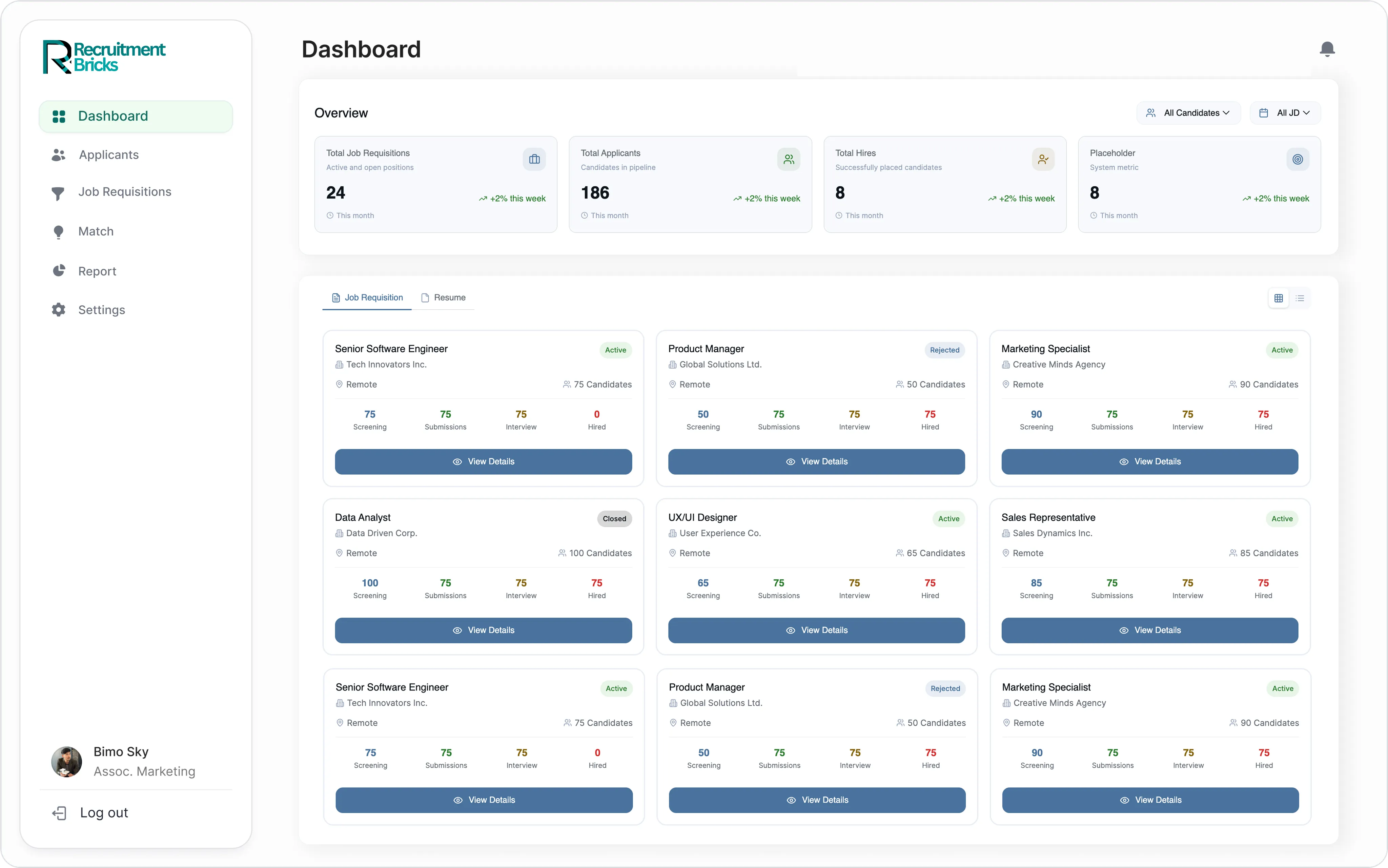
Candidate screening software has become a critical weapon in the modern recruiter's toolkit. In today's hiring landscape, the best candidates are off the market within days. If your team spends weeks manually reviewing applications, your competitors have already made the offer. This blog explains how AI-powered screening tools help you identify serious, high-intent candidates early so you can move faster and hire smarter.
Key Takeaways
- Candidate screening software uses AI to detect intent signals, prioritizing candidates who are most likely to accept offers and stay long-term.
- Traditional candidate screening processes are too slow and miss behavioral cues that indicate genuine interest.
- AI bots, intelligent applicant screening software, and integrated candidate tracking systems work together to give your team a measurable speed-to-hire advantage.
Why Speed Wins in the Race for Top Talent
Not every applicant is equally serious. Some candidates apply to dozens of roles without genuine intent to join. Identifying who is truly motivated early in the funnel saves enormous time and resources. High-intent candidates respond faster, engage more deeply with pre-screening steps, and are far less likely to drop out before the offer stage.
The competition for skilled talent is fierce. Research from SHRM consistently shows that top candidates remain available for fewer than ten days before being hired by another employer. Every delay in your candidate screening process widens the window for a competitor to swoop in. Recognizing intent early is not a luxury; it is a strategic necessity.
Platforms like RecruitmentBricks are built specifically to surface these signals. Their action-enabled approach tells recruiters exactly who to prioritize and what step to take next, removing guesswork from the equation entirely.
Gaps in the Traditional Candidate Screening Process
Manual screening was designed for a different era. Recruiters read through hundreds of resumes, schedule phone calls, and rely on gut instinct. This approach has several critical gaps that cost organizations top talent every single day.
- Volume overwhelm: High-application-volume roles make it physically impossible to give every candidate equal attention.
- No behavioral signals: A printed resume tells you what someone has done, not how motivated they are right now.
- Delayed follow-ups: Manual workflows mean days pass between a candidate applying and hearing back, killing engagement.
- Inconsistent evaluation: Human reviewers apply different standards, introducing bias and variability into candidate selection methods.
- Pipeline stalls: Without automation, hiring pipelines stall at every handoff point, from sourcing to interview scheduling.
These gaps are not just inefficiencies; they are competitive disadvantages. A structured, AI-assisted approach directly addresses each one of these failure points in the traditional process.
How Candidate Screening Software Improves Selection
Modern candidate screening software does far more than sort resumes. It analyzes how candidates interact with your process, what they say during structured conversations, how quickly they respond, and how their qualifications align with the actual job requirements. This multi-dimensional view allows recruiters to make smarter decisions faster.
The most effective platforms combine multiple capabilities: AI-driven voice screening, intelligent resume matching, behavioral analysis, and automated engagement. Together, these features create a comprehensive picture of each candidate's intent and fit before a human recruiter ever picks up the phone.
AI Bot for Candidate Screening
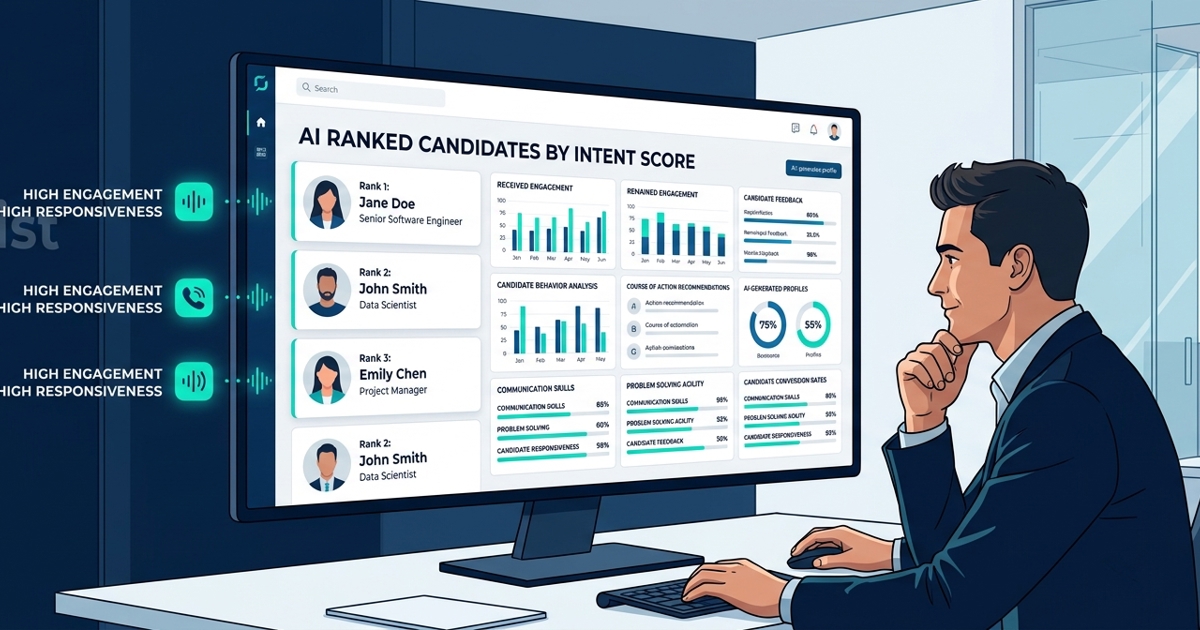
An AI bot for candidate screening conducts structured voice or chat interviews automatically. Rather than waiting for a recruiter to be available, the bot engages candidates the moment they apply. It asks custom questions based on the job description and the candidate's resume, records responses, and scores them against predefined criteria.
RecruitmentBricks' VoiceBot, for example, conducts real voice-based screening conversations and generates AI-driven scores for each candidate. This means a recruiter reviewing 200 applications sees a ranked list based on actual spoken responses, not just keywords on a page. The bot captures intent signals such as response time, communication quality, and answer relevance, giving the hiring team data that a resume simply cannot provide. This dramatically reduces the time spent on early-stage screening while increasing the quality of candidates who reach the interview stage.
Intelligent Applicant Screening Software
Intelligent applicant screening software goes beyond basic keyword matching. It uses explainable AI match scores to align candidate profiles with job descriptions at a deeper level. It considers skills, experience patterns, career trajectory, and even how a candidate phrases their qualifications.
This layer of intelligence also supports bias reduction. When match scores are transparent and explainable, hiring managers can see exactly why a candidate ranks highly. This removes the subjectivity that often creeps into manual reviews. Platforms offering AI candidate sourcing capabilities can extend this intelligence to proactively find qualified candidates from external talent pools, not just inbound applicants. The result is a fuller pipeline built around fit and intent rather than volume alone.
Candidate Tracking System Integration
A powerful candidate tracking system connects all stages of the hiring funnel into one coherent view. When your screening software integrates seamlessly with your existing ATS, HRMS, and CRM tools, no candidate falls through the cracks and no data lives in isolation.
RecruitmentBricks is designed to integrate with the systems your team already uses. Its modular architecture means you can add screening, engagement, and analytics capabilities without replacing your entire tech stack. The platform also connects with tools like Google Workspace and communication platforms to automate interview scheduling, send feedback nudges, and log every interaction automatically. This end-to-end visibility allows hiring managers to see exactly where each candidate stands at any moment.
Business Impact: Faster Hiring and Better Conversion
The business case for candidate screening software comes down to two numbers: time-to-hire and offer acceptance rate. When you identify high-intent candidates faster and engage them before competitors do, both numbers improve significantly.
RecruitmentBricks reports that clients using the platform experience up to 60% faster time-to-hire. That is not just a speed metric; it translates directly into reduced recruiter workload, lower cost-per-hire, and better candidate experience. A candidate who receives a structured, responsive process is far more likely to accept an offer and speak positively about your employer brand.
- Faster hiring cycles: AI screening eliminates manual bottlenecks at every stage of the funnel.
- Higher offer acceptance: Engaged, well-informed candidates convert at significantly higher rates.
- Reduced recruiter burnout: Automation handles repetitive tasks, freeing recruiters to focus on relationship-building.
- Improved pipeline health: Real-time analytics dashboards surface sourcing effectiveness and engagement drop-off points instantly.
For enterprise teams handling hundreds of roles simultaneously, these gains compound quickly. You can explore how AI recruitment software for enterprise teams cuts time-to-hire to understand the full scope of what is possible.
What to Look for in Candidate Screening Software
Choosing the right platform requires evaluating several key dimensions. Not all candidate screening software is built the same. Here is what your evaluation checklist should include.
- AI-powered scoring: Look for explainable match scores that go beyond keyword matching to assess real candidate fit.
- Voice or conversational screening: AI bots that conduct structured interviews capture intent signals no resume can reveal.
- Engagement automation: WhatsApp outreach, auto-scheduling, and follow-up nudges keep candidates warm without manual effort.
- Integration capability: The platform must connect with your existing ATS, HRMS, and calendar systems without disruption.
- Modular design: You should be able to adopt features incrementally, not be forced into an all-or-nothing deployment.
- Bias reduction features: Transparent scoring and structured evaluation criteria reduce the risk of unconscious bias in early screening.
- Analytics and reporting: Pipeline health dashboards and sourcing effectiveness metrics are essential for continuous improvement.
Platforms that combine all these features in one cohesive system, such as RecruitmentBricks, offer a significant advantage. You can review the full range of platform capabilities on the RecruitmentBricks features page to see how each module supports your specific hiring goals.
Conclusion: Gain the Competitive Edge in Hiring
The difference between winning and losing top talent often comes down to hours, not days. Candidate screening software powered by AI gives your team the ability to detect high-intent candidates the moment they enter your funnel, engage them instantly, and move them through a structured process before competitors even finish reviewing resumes. From AI bots and intelligent applicant screening to integrated candidate tracking, the right platform transforms hiring from a reactive chore into a proactive competitive advantage. If your organization is serious about hiring speed and quality, now is the time to modernize your candidate screening process. Request a demo from RecruitmentBricks and see how AI-powered screening can reshape your talent acquisition strategy.
FAQs
1: What is candidate screening software and how does it work?
Candidate screening software uses AI to evaluate applicants based on qualifications, behavioral signals, and engagement. It automates early-stage filtering through resume parsing, voice bots, and match scoring, helping recruiters identify the most suitable candidates before investing significant time in manual reviews.
2: How does an AI bot for candidate screening detect high-intent candidates?
An AI bot for candidate screening engages applicants through voice or chat interviews immediately after they apply. It measures response time, communication quality, and answer relevance. These behavioral signals indicate genuine interest and motivation, allowing recruiters to prioritize candidates who are most likely to complete the hiring process.
3: What makes intelligent applicant screening software different from basic ATS tools?
Intelligent applicant screening software uses explainable AI match scores and contextual analysis rather than simple keyword filters. It evaluates career trajectory, skills depth, and response patterns. This produces a more accurate and bias-reduced candidate ranking than traditional applicant tracking systems that rely purely on keyword presence.
4: How does the candidate screening process benefit from AI automation?
AI automation removes manual bottlenecks from the candidate screening process by handling resume parsing, interview scheduling, candidate scoring, and follow-up communications automatically. This reduces time-to-hire significantly and ensures no high-quality applicant is overlooked simply because a recruiter lacked bandwidth to review every application in time.
5: What role does a candidate tracking system play in modern hiring?
A candidate tracking system consolidates pipeline data across all hiring stages into one view. It connects sourcing, screening, interview, and offer stages so nothing falls through the cracks. Platforms like RecruitmentBricks integrate these tracking capabilities with existing ATS and HRMS tools for seamless end-to-end workflow management.
6: Can candidate screening software reduce bias in hiring decisions?
Yes. Platforms using explainable AI scoring make evaluation criteria transparent and consistent across all applicants. This structured approach to candidate selection methods reduces the subjectivity that drives unconscious bias in manual reviews. However, software supports bias reduction rather than eliminating it entirely; human oversight remains essential throughout the hiring process.
7: What is AI candidate sourcing and how does it complement screening?
AI candidate sourcing proactively identifies qualified candidates from talent pools, job boards, and databases rather than waiting for inbound applications. When combined with intelligent screening, it creates a complete pipeline strategy. You attract the right profiles and then immediately filter them by fit and intent, compressing the overall hiring timeline.
8: How does WhatsApp outreach fit into the candidate screening workflow?
WhatsApp outreach keeps candidates engaged after initial AI screening by delivering updates, interview invitations, and feedback nudges directly to their phones. This conversational engagement channel improves response rates significantly compared to email. For teams managing high-volume roles, automated WhatsApp follow-ups maintain candidate warmth without adding to recruiter workload, supporting stronger conversion at every funnel stage.
9: What should HR teams look for when evaluating candidate screening platforms?
HR teams should prioritize platforms with explainable AI scoring, voice or chat screening bots, seamless ATS integration, and modular deployment options. Analytics dashboards for pipeline health are equally important. RecruitmentBricks shares detailed guidance on recruitment technology selection through their recruitment insights blog, which covers practical evaluation criteria for talent acquisition leaders.
10: How quickly can a team see results after implementing candidate screening software?
Most teams notice improvements in screening speed within the first few hiring cycles after deployment. Automated resume parsing and AI scoring reduce early-stage review time immediately. Engagement automation and voice bot screening begin capturing intent signals from the first batch of applicants, allowing recruiters to make faster and more confident shortlisting decisions from day one.