Why is ATS making it harder to find a job?
Job seekers chase a high ATS score. They add keywords. They fix formatting. They believe this alone will land them an interview.
It won't. Not by itself.
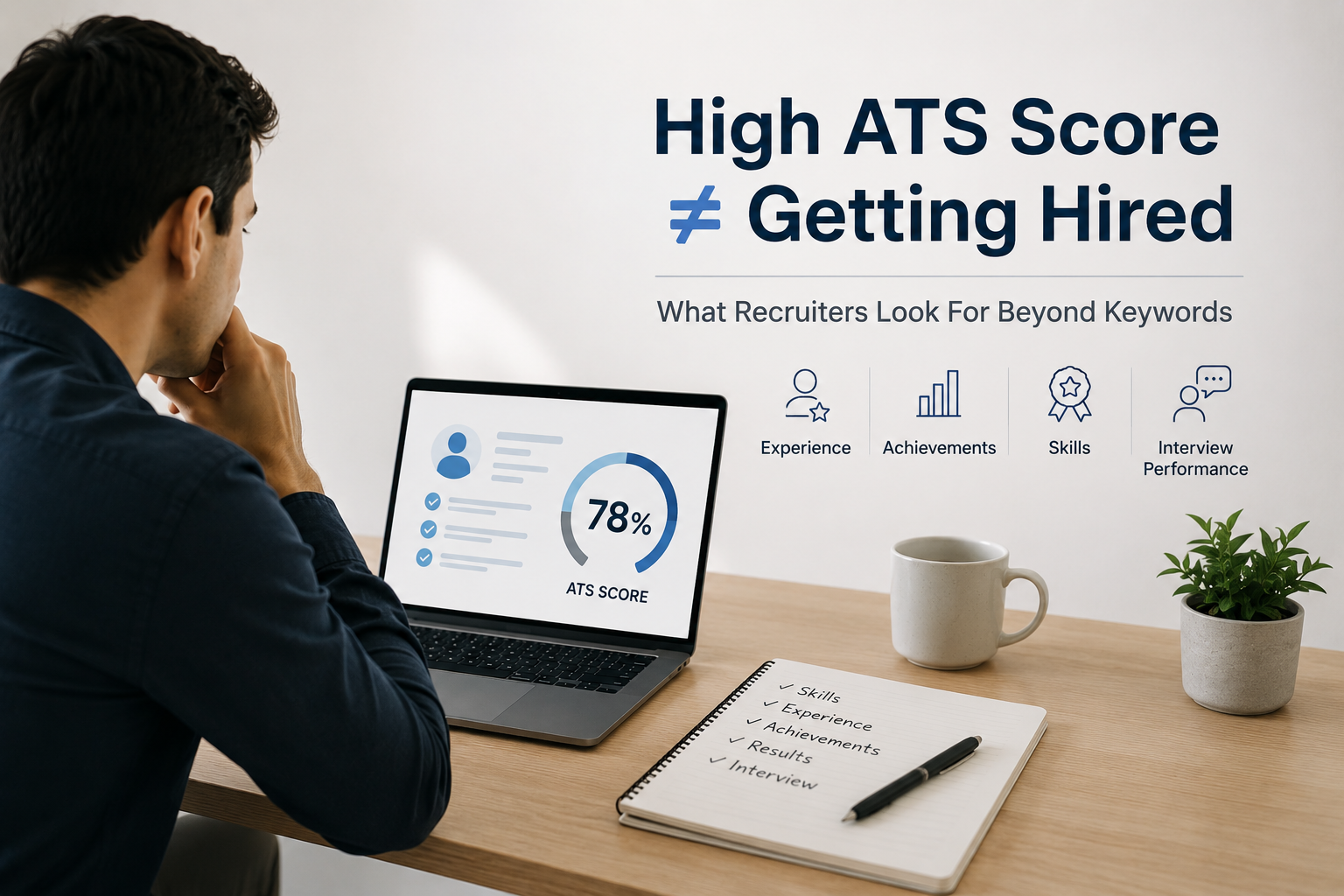
Resume tools can boost your ATS score. That helps you clear the first screening round. But it can't guarantee an interview. It can't guarantee a job offer.
Recruiters have moved past simple keyword matching. Most now use AI recruitment software instead. It judges candidates on skills, experience, achievements, and overall fit. An applicant tracking system just organizes applications. It doesn't make the final call.
What Is an ATS Score?
An applicant tracking system (ATS) is software. It helps recruiters collect, sort, and manage large volumes of applications.
An ATS resume score estimates one thing: how closely your resume matches a job description. It checks your:
- Keywords
- Skills
- Requirements
- Formatting
A higher score can boost your visibility in the first screening pass. But it's not a hiring score. Recruiters still check your:
- Real-world experience
- Measurable results
- Industry knowledge
- Certifications
- Interview performance
Treat your ATS score as the first filter. Not the final decision.
Why Recruiters Look Beyond Keywords
AI resume builders are everywhere now. So are ATS optimization tools, templates, and keyword suggestions.
The result? Most resumes now use the same handful of phrases: leadership, teamwork, communication, flexibility, problem-solving.
Recruiters see hundreds of near-identical resumes. So they need a wider lens. Your resume might be built for an ATS. That doesn't prove you have the right experience for the role.
Recruiters weigh several things to find the best fit:
- Measurable achievements
- Technical skills
- Certifications
- Career growth
- Relevant projects
- Industry experience
That's why a candidate with an ATS score of 78 sometimes gets shortlisted over someone scoring 95. Hiring is about finding the right person. Not the highest score.
How AI Recruitment Software Improves Candidate Screening
Modern AI recruitment software builds on traditional ATS tools. It helps recruiters:
- Review applications faster
- Cut manual work
- Make sharper hiring decisions
AI-Powered JD–Resume Matching
Reading every application by hand takes time. JD-resume matching skips that step. It compares resumes against job descriptions. It surfaces candidates whose skills and experience align closely with the role. Recruiters build stronger shortlists faster. They still make the final call themselves.
Resume Parsing
Resume parsing software pulls out key details automatically: education, work history, technical skills, certifications, contact info. It turns resumes into structured, searchable candidate profiles. No manual review needed.
Candidate Scoring
Candidate scoring software looks past keywords alone. It weighs multiple hiring factors at once. This helps recruiters prioritize qualified applicants. Recruiters still stay in control of the final selection.
VoiceBot Screening
VoiceBot screening automates the first round. It asks candidates about their experience, notice period, availability, and salary expectations. Every answer lands in one place for recruiters. This cuts scheduling delays. It speeds up shortlisting.
Reverse Resume Matching
Recruiters don't need to start every search from zero. Reverse resume matching compares new openings against resumes already in the database. It resurfaces strong past applicants who now fit the role.
Action-Enabled System
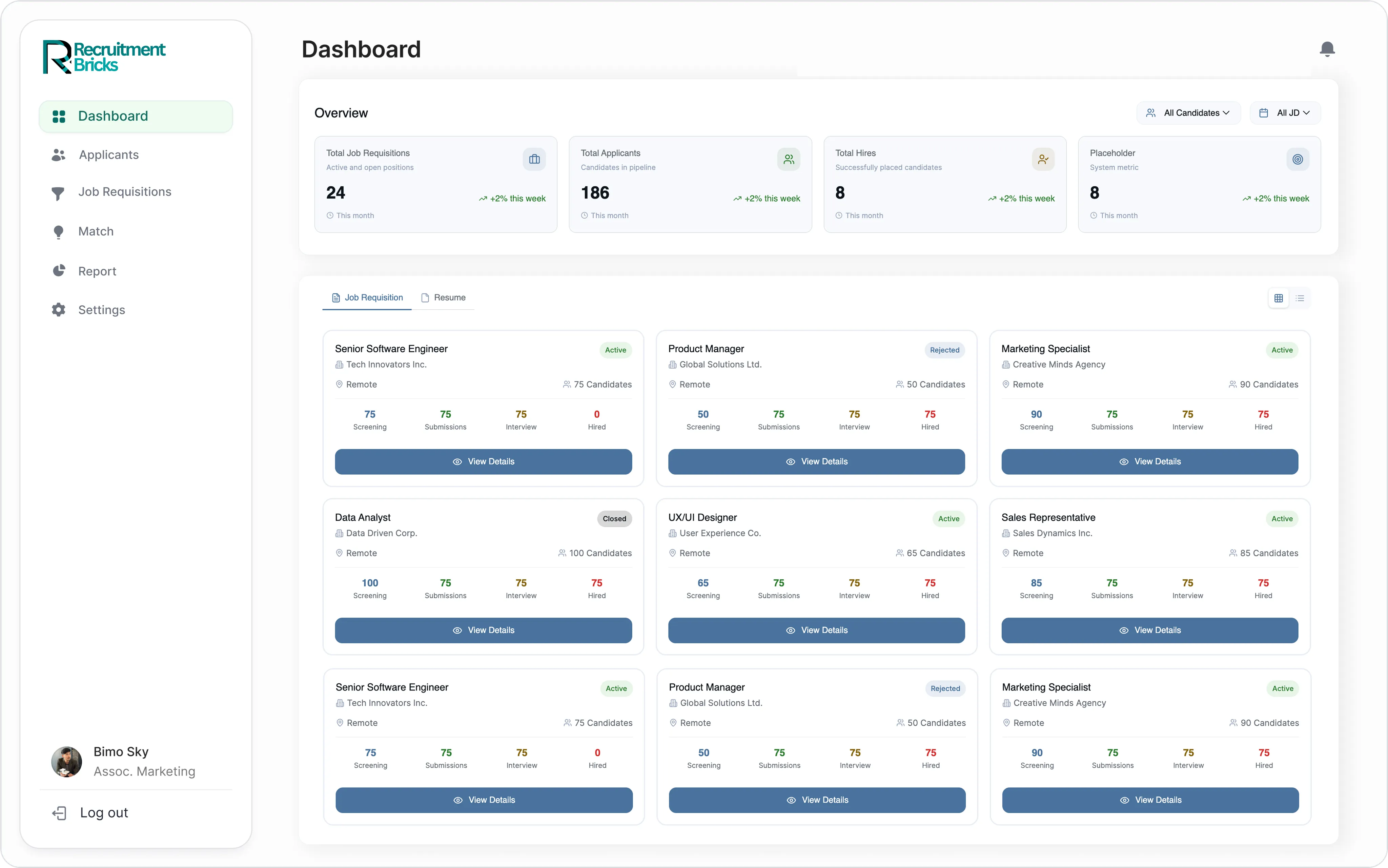
A standard dashboard shows data. An action-enabled system goes further: it tells recruiters what to do next. Review a resume. Schedule an interview. Request feedback. Send a follow-up. This keeps every candidate moving. It cuts missed tasks. It reduces the risk of losing a qualified applicant to delay.
Final Thoughts
A high ATS score can boost your resume's visibility. It should never decide whether you get hired. Modern recruitment goes well beyond keyword matching.
Pair AI-powered recruitment software with human judgment. Companies find stronger candidates this way. They cut hiring delays. They make better decisions, faster.
If you're job hunting, don't stop at ATS optimization. Show your skills clearly. Show your achievements. Show your real-world experience. That's what actually gets you hired.
FAQs
What is an ATS score?
An ATS score estimates how closely your resume matches a job description. It's based on keywords, skills, requirements, and formatting.
Can a high ATS score guarantee an interview?
No. A high score can boost your resume's visibility. But recruiters still weigh experience, achievements, technical skills, and overall fit before shortlisting candidates.
How does AI recruitment software improve hiring?
It automates JD-resume matching, resume parsing, candidate scoring, VoiceBot screening, and reverse resume matching. This helps recruiters find qualified candidates faster, with less manual work.
How does RecruitmentBricks improve recruitment?
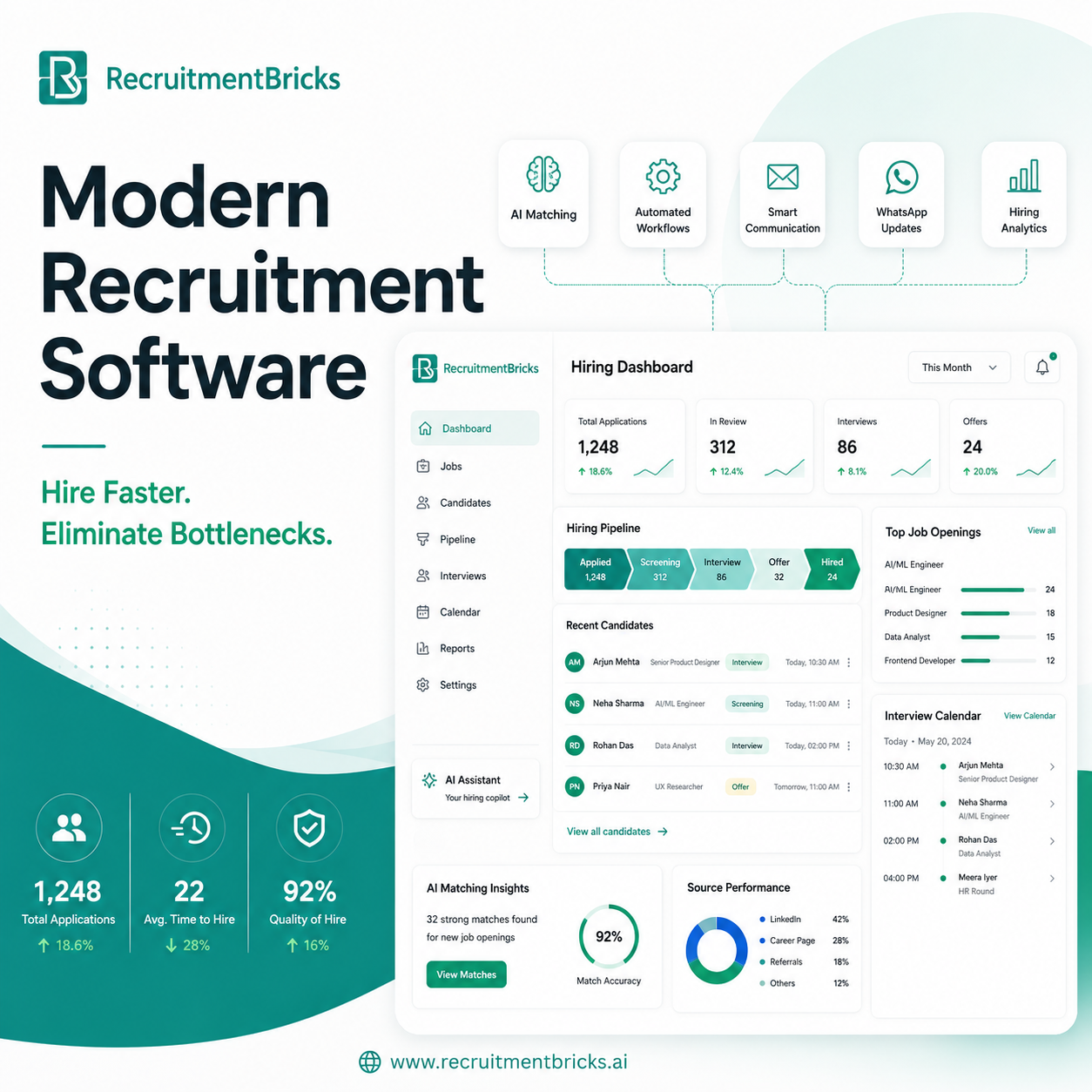
RecruitmentBricks combines AI-powered recruitment features into one platform. It simplifies candidate screening. It improves hiring visibility. It automates repetitive tasks. It speeds up recruitment decisions.
Do recruiters use ATS?
An ATS acts as a database for job applicants, automating and managing the workflows associated with the recruitment process. It allows hiring managers and recruiters to cut through the volume of résumés received so they can focus their time on the most qualified applicants.