AI hiring software is changing the way organizations find, screen, and select top candidates. Recruitment teams that once relied on manual resume reviews and time-consuming phone screens are now turning to intelligent tools that automate and improve every step of the process. Whether you are managing a high-volume hiring pipeline or looking for niche talent, the right AI-powered recruitment platform can dramatically improve the quality of candidates who reach your final interview stage. In this blog, you will learn how AI hiring software works, what makes it effective, and how to choose the right solution for your team.
Key Takeaways
- AI hiring software automates repetitive screening tasks and surfaces the best candidates faster using intelligent matching and scoring.
- Modern candidate screening software uses voice AI, resume parsing, and explainable match scores to improve selection quality without bias.
- Adopting a structured candidate screening process powered by AI reduces time-to-hire and helps recruiters focus on high-value decisions.
- Platforms like RecruitmentBricks offer modular, action-enabled tools that integrate seamlessly with existing ATS and HRMS systems.
What Is AI Hiring Software and Why Does It Matter?
AI hiring software refers to technology that uses artificial intelligence to automate and enhance key recruitment tasks such as resume screening, candidate matching, interview scheduling, and engagement. It removes the guesswork from early-stage hiring by using data to rank and evaluate candidates objectively.
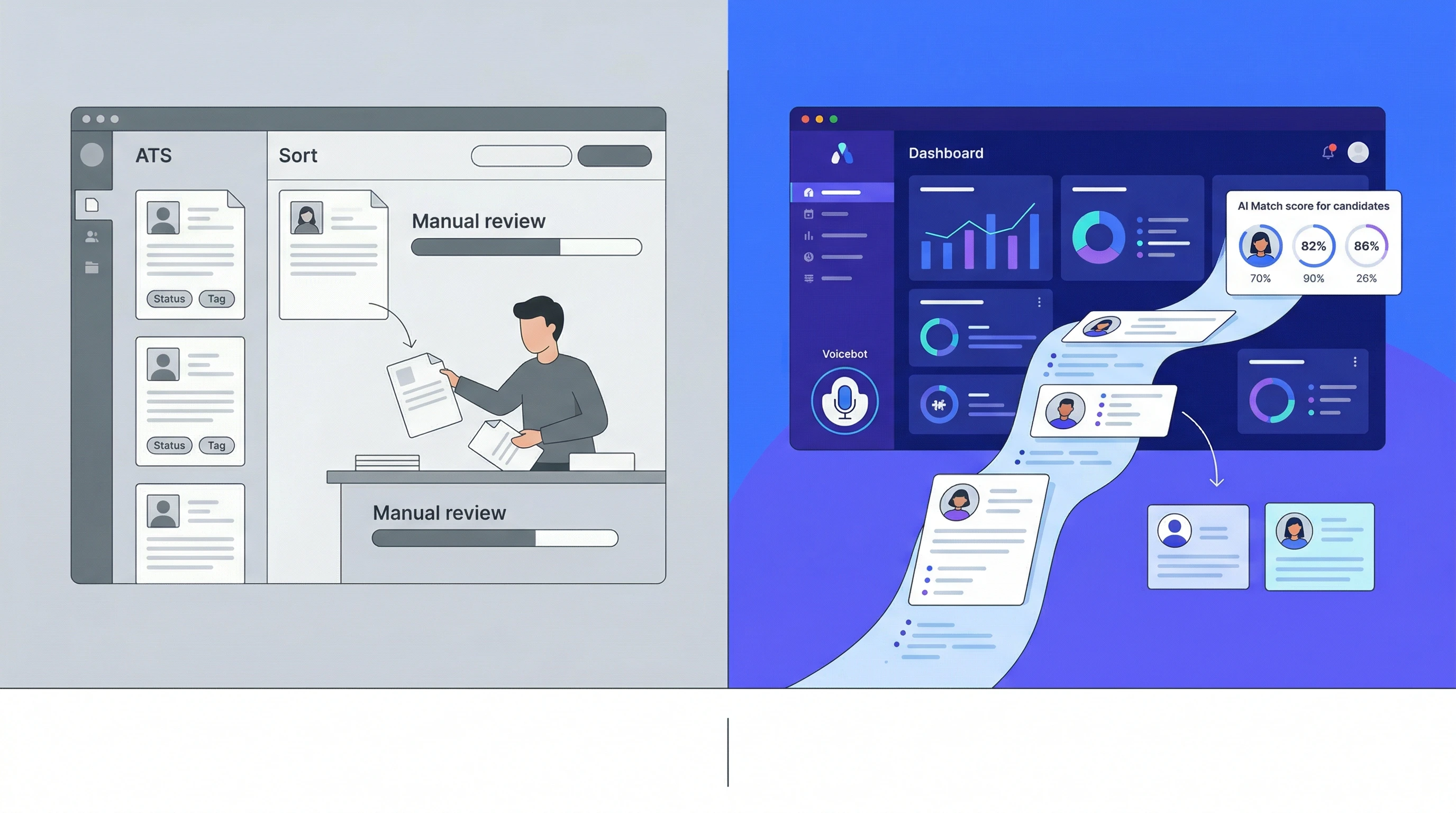
The traditional hiring process is slow, inconsistent, and prone to unconscious bias. Recruiters often spend hours reviewing resumes that do not meet even basic job requirements. AI hiring software solves this by instantly parsing resumes, comparing them against job descriptions, and generating explainable match scores. According to SHRM's talent acquisition research, organizations that use AI in recruitment see measurable improvements in both speed and quality of hire. The result is a leaner, smarter hiring pipeline that allows recruiters to focus on what they do best: building relationships and making confident decisions.
How Candidate Screening Software Improves Selection Quality
Effective candidate screening software does more than filter out unqualified applicants. It helps recruiters identify the best-fit candidates based on skills, experience, and role requirements, all in real time.
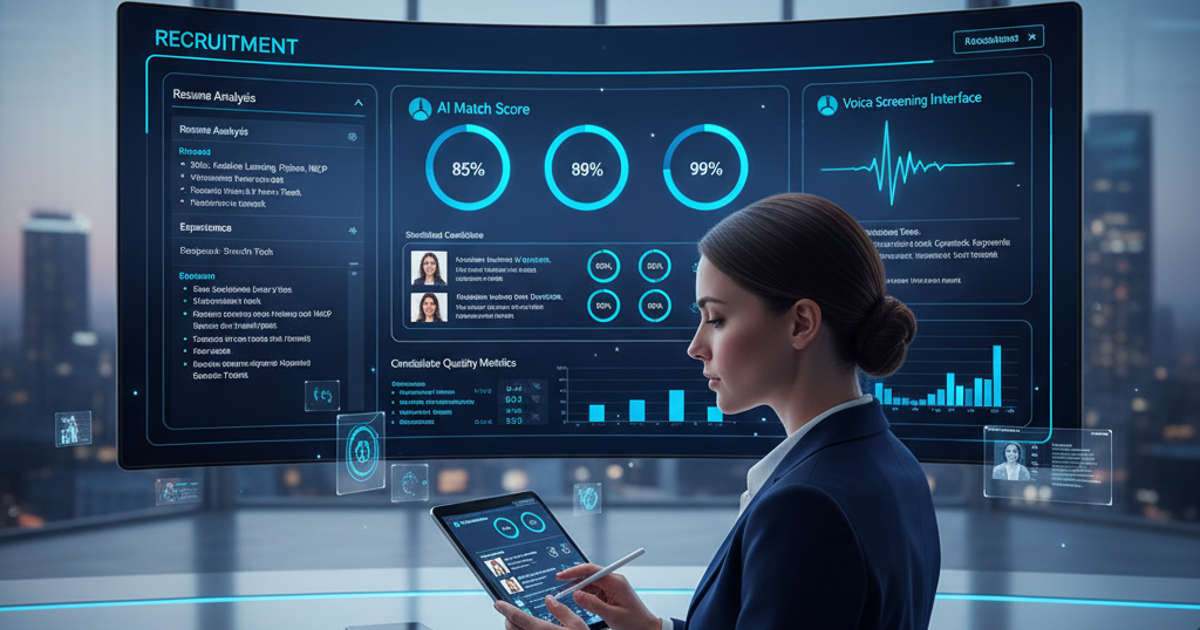
Modern platforms use natural language processing to read and interpret resume content far more accurately than keyword-based filters. They generate structured scoring that explains why a candidate is a strong match, making the process transparent and defensible. For example, AI resume screening software USA teams use today can automatically flag candidates whose skills align with a job description while deprioritizing those who do not, without recruiters having to open a single document. This level of automation speeds up the early screening stage significantly while also reducing the impact of unconscious bias. Platforms like RecruitmentBricks take this a step further by offering a VoiceBot that conducts structured AI-driven voice interviews, qualifying candidates through conversation before they ever reach a human recruiter.
Understanding Modern Candidate Selection Methods
The most effective candidate selection methods today combine human judgment with AI-generated insights. This hybrid approach ensures that data informs decisions without removing the human element from hiring.
AI-powered selection tools can assess candidates across multiple dimensions simultaneously: resume fit, communication skills, role-specific knowledge, and even responsiveness during the engagement process. Rather than relying solely on a single interview or gut feeling, hiring teams now have access to structured data at every stage. For instance, an AI recruiting tool can score candidates after a voice screening session, generate a summary for the recruiter, and recommend the next best action within the same workflow. This is exactly what RecruitmentBricks calls being 'action-enabled': the platform does not just present data but tells the recruiter what to do next and helps them do it. Learn more about how enterprise teams are leveraging these capabilities in our post on AI recruitment software for enterprise teams.
Key Features to Look for in an AI Recruiting Tool
Not all AI recruiting tools are created equal. Here are the most important features that define a high-quality platform:
- Explainable AI match scores: Recruiters should understand why a candidate is ranked highly, not just that they are.
- Voice or conversational screening: Automated VoiceBots that conduct structured interviews save hours of manual phone screening time.
- Resume and JD parsing: Real-time parsing ensures that both job descriptions and candidate profiles are interpreted accurately.
- Candidate engagement automation: WhatsApp outreach, interview scheduling, and feedback nudges keep candidates warm and reduce drop-off.
- ATS and HRMS integration: The tool should connect seamlessly with your existing systems to avoid duplication of effort.
- Internal mobility support: The best platforms also match internal employees with open roles, reducing the cost of external hiring.
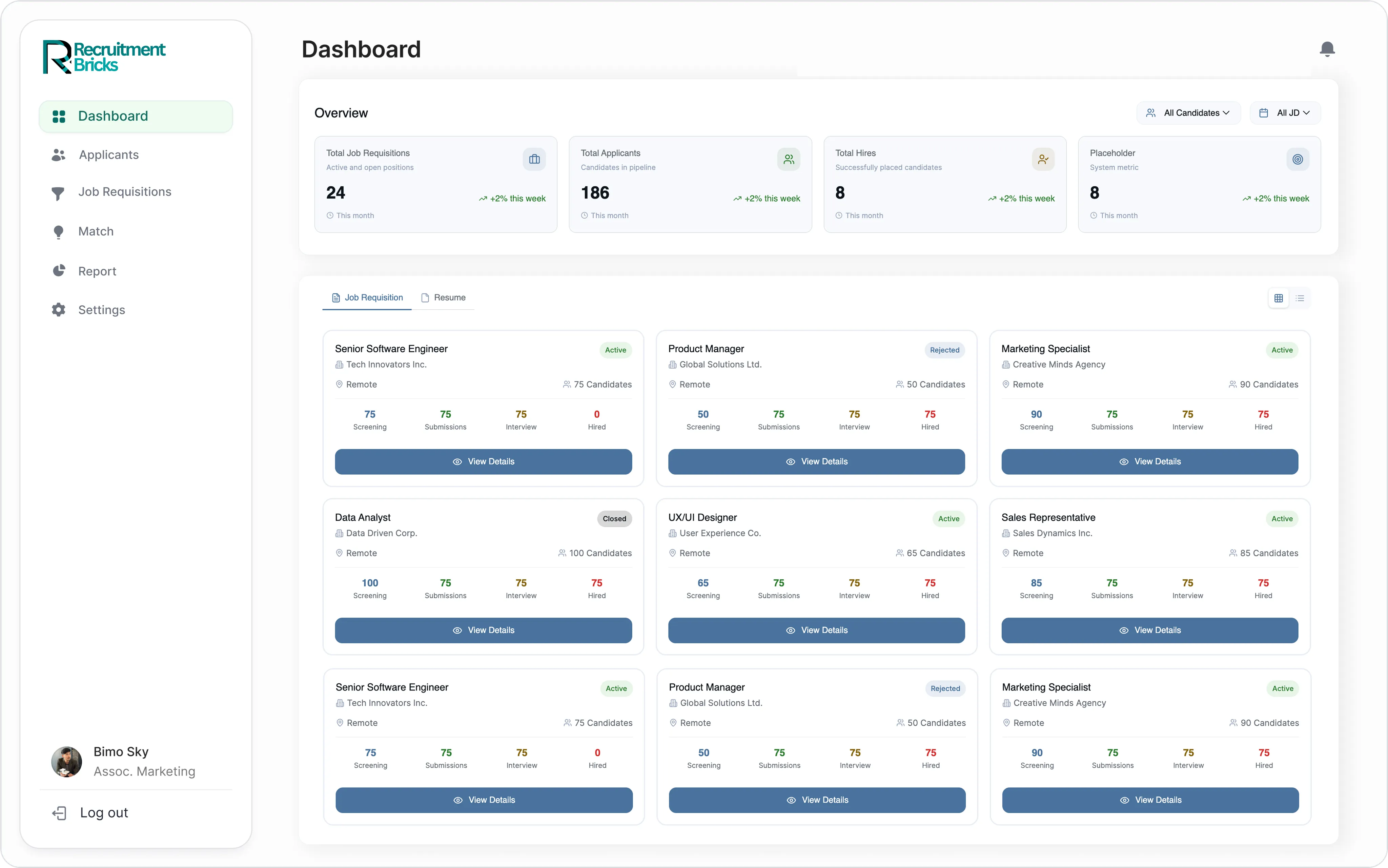
- Pipeline analytics: Real-time dashboards that show pipeline health, sourcing effectiveness, and engagement rates help teams make smarter decisions.
Building a Smarter Candidate Screening Process with AI
A well-structured candidate screening process is the backbone of any successful recruiting operation. When AI is embedded into each stage, the entire pipeline becomes faster, fairer, and more effective.
Here is how a modern AI-powered screening process typically flows: First, job descriptions are parsed and optimized for matching. Next, incoming resumes are scored against the job in real time. Candidates who meet a defined threshold are automatically invited to a voice screening session conducted by a VoiceBot. After the session, scores and summaries are generated and shared with the recruiter, who then decides on the next step. Throughout this process, candidates receive automated follow-ups and scheduling links via WhatsApp, keeping them engaged without any manual effort from the recruitment team. This structured approach ensures that no qualified candidate falls through the cracks while also preventing recruiters from wasting time on poor-fit applications. Platforms like RecruitmentBricks are purpose-built for this kind of end-to-end automation. You can explore how these tools integrate with your existing stack on the RecruitmentBricks integrations page.
Why AI Hiring Software Must Assist, Not Replace, Recruiters
One of the most important principles in modern AI-powered recruitment is that technology should support human decision-making, not replace it. AI can surface insights, automate repetitive tasks, and reduce bias in early screening, but the final hiring decision must always involve a human.
This philosophy is central to how RecruitmentBricks was built. The platform is designed to be 'action-enabled': it tells recruiters what their next best step is and then helps them execute it. The co-founders, who come from data science and HR consulting backgrounds, built the platform specifically to address the inefficiencies they experienced in manual recruitment processes. The goal was never to remove recruiters from the equation but to give them better tools so they could focus on high-value work. This human-first design philosophy makes the platform both more ethical and more practical for real-world recruitment teams. If you want to see this approach in action, you can request a demo from RecruitmentBricks to explore the platform firsthand.
Conclusion
Investing in the right AI hiring software is one of the most impactful decisions a recruitment team can make. From improving the speed and accuracy of your candidate screening process to enabling smarter candidate selection methods, AI tools are reshaping how organizations find and hire top talent. Platforms like RecruitmentBricks offer a modular, human-first approach that combines VoiceBot screening, AI resume matching, candidate engagement automation, and pipeline analytics in a single integrated solution. If your team is ready to move beyond manual hiring and build a smarter, faster recruitment pipeline, explore what RecruitmentBricks can do for your organization today.
FAQ
What is AI hiring software?
AI hiring software uses artificial intelligence to automate recruitment tasks like resume screening, candidate matching, and interview scheduling. It helps recruiters identify top candidates faster and more accurately, reducing manual effort and improving the overall quality of the hiring pipeline.
How does candidate screening software reduce bias in hiring?
Candidate screening software uses data-driven scoring instead of subjective judgment. It evaluates candidates based on skills and role fit rather than personal characteristics. RecruitmentBricks offers explainable AI match scores designed to promote fairer, more transparent hiring decisions.
What are the benefits of using an AI recruiting tool for high-volume hiring?
An AI recruiting tool automates early-stage screening, ranks candidates instantly, and keeps applicants engaged through automated follow-ups. This allows recruitment teams to manage large volumes of applications without sacrificing quality or overwhelming their recruiters with repetitive manual tasks.
What is a VoiceBot in the context of AI hiring software?
A VoiceBot is an AI-driven tool that conducts structured voice interviews with candidates automatically. It scores responses, generates summaries, and qualifies applicants before a human recruiter gets involved, saving significant time in the early stages of the candidate screening process.
How does AI resume screening software work?
AI resume screening software parses resumes and job descriptions using natural language processing. It then generates match scores that explain why a candidate is or is not a strong fit. This replaces manual keyword filtering with a smarter, context-aware evaluation of each applicant.
Can AI hiring software integrate with existing ATS or HRMS platforms?
Yes, most modern AI hiring platforms are designed to integrate with existing ATS and HRMS systems. RecruitmentBricks integrations allow teams to connect the platform with their current recruitment stack for a seamless end-to-end workflow without duplicating effort.
What candidate selection methods does AI support?
AI supports candidate selection methods including resume scoring, structured voice interviews, skills-based assessments, and engagement tracking. These methods provide recruiters with multi-dimensional data on each candidate, enabling more confident and evidence-based final hiring decisions.
Does AI hiring software replace human recruiters?
No, AI hiring software is designed to assist recruiters, not replace them. It automates repetitive tasks and surfaces insights so recruiters can focus on relationship-building and final decision-making. The human element remains essential for evaluating cultural fit and making final hiring calls.
How does AI improve the candidate screening process timeline?
AI accelerates the candidate screening process by instantly parsing resumes, scoring candidates, conducting automated voice interviews, and scheduling next steps without manual intervention. This reduces bottlenecks across the pipeline and helps teams move qualified candidates through to interviews much faster.
Is AI hiring software suitable for small businesses or only large enterprises?
AI hiring software is suitable for organizations of all sizes. Modular platforms allow smaller teams to adopt only the features they need, while larger enterprises can deploy end-to-end automation. Scalable solutions make AI-powered recruitment accessible regardless of company size or hiring volume.